A Soldier Among Civilians: George Washington @ 250
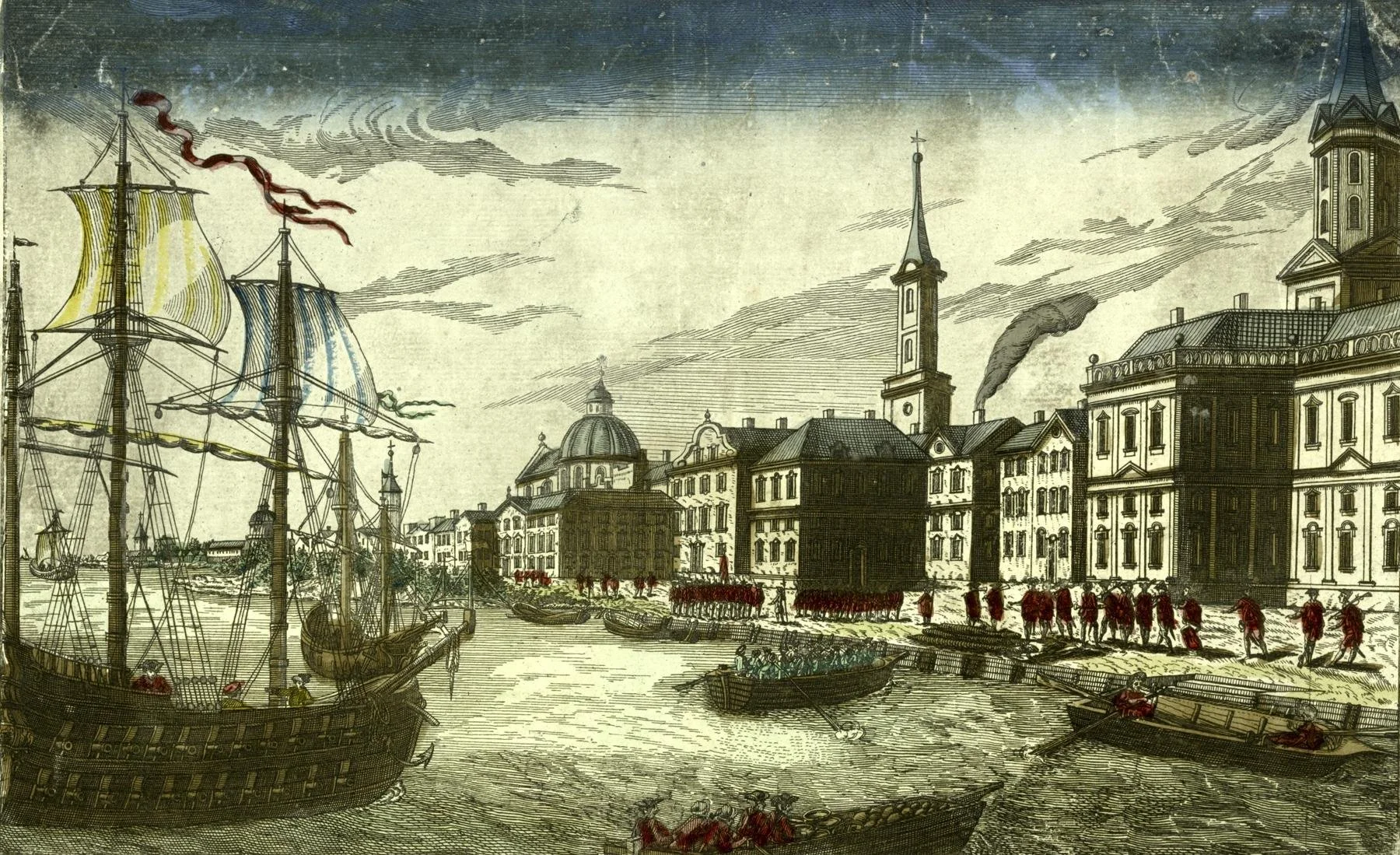
British ships at New York, September 1776 (New-York Historical Society)
Among Commander in Chief George Washington’s concerns 250 years ago this week, as he oversaw his army’s preparations to defend New York City from probable British attack, were civilians—and civilian authority. Each concern reflected central pillars to his conception of military command.
Whatever he and his Continental Army might be able to accomplish, Washington understood that the war would end immediately, in total defeat, if American civilians decided it was no longer worth fighting. The challenges of the military campaign of 1776 would cement this idea in his mind, as we’ll see when we consider the events of that autumn. Even now in the spring, though, he recognized how commercial temptations might undermine civilians’ determination to carry on the conflict.
Fortifying the shores and channels around Manhattan allowed the Americans to deny shelter to the various British ships still haunting the area, forcing the vessels to retire down to Sandy Hook, New Jersey, thirty miles from the city. Washington then turned to the New York Committee of Safety, asking for its members to issue an order prohibiting any civilian intercourse with British vessels—so that he could himself issue a like proclamation under shelter of their civilian authority, instead of using his army to impose his own wishes on the populace. The distinction was a delicate, but essential one.
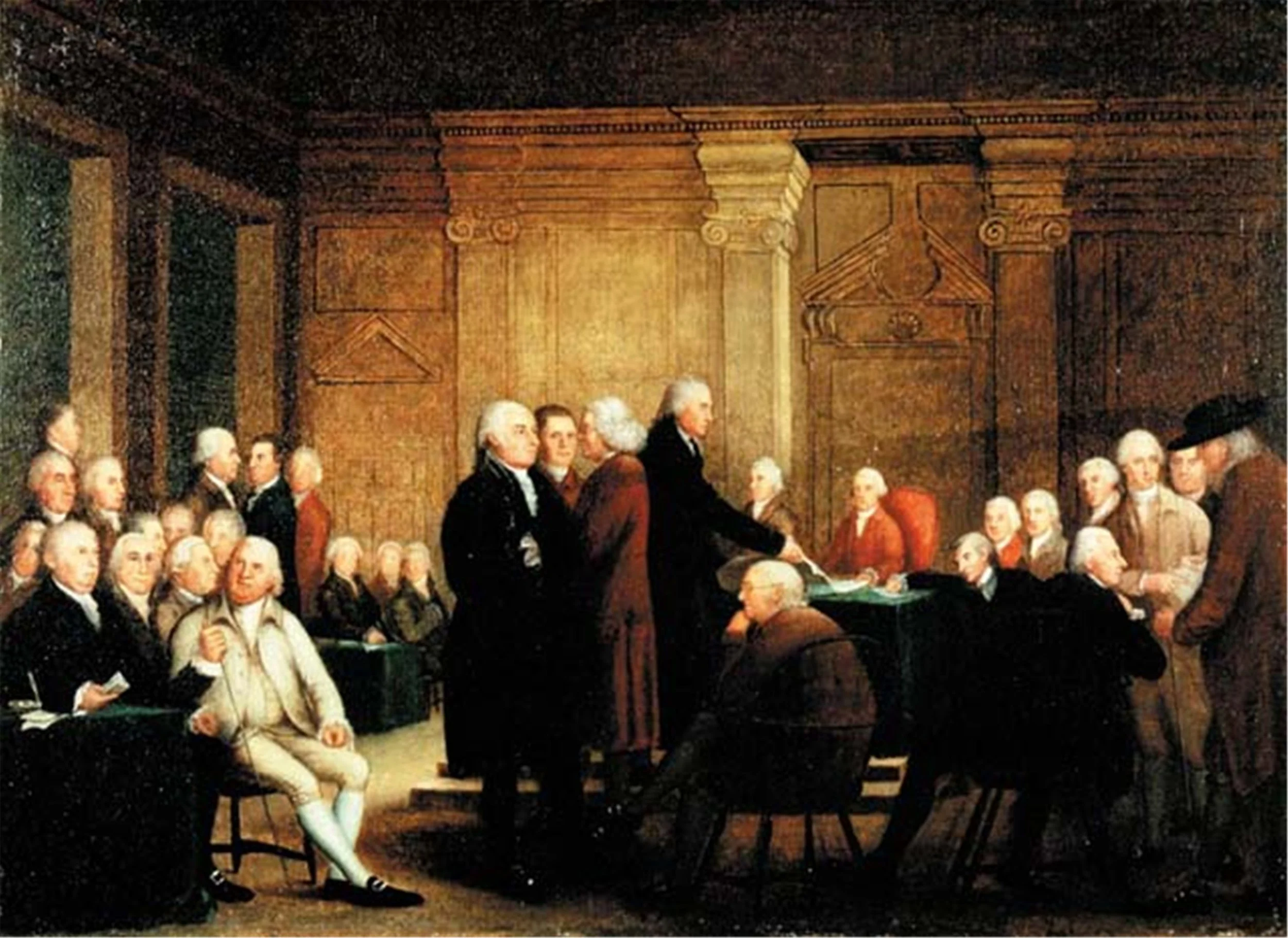
The Continental Comgress votes for independence (Historical Society of Pennsylvania)
A Proclamation, and a Disclaimer
On April 29, 1776, then, Washington issued a formal proclamation, printed in city newspapers, declaring: “Whereas an Intercourse and Correspondence with the Ships of War, and other Vessels belonging to, and in the Service of the King of Great Britain, is highly detrimental to the Rights and Liberties of the said Colonies. . . . Notwithstanding which, there is Reason to believe that sundry base and wicked Persons, preferring their own, present private Emolument to their Country’s Weal, have continued to carry on the same, particularly some who under Pretence of coming to the Market of this City by Water, have put themselves, their Vessels and Effects in the Way of the Ships of War, for the Purposes of giving Intelligence and furnishing them with Supplies of Provision; [anyone] so offending will be deemed and considered as an Enemy, or Enemies to the Rights of the said Colonies, and if apprehended will be treated accordingly.”
Six days later Washington wrote to Continental Congress President John Hancock. Maybe seeking to soften even the slightest perception of military dominance, the general symbolically bent his knee, declaring formally that he would always accede to Congress’s directions, even in what he considered the most important matters. This included his personal perception that the British would attack New York City next, and that he should place his army there for that reason. “If the Congress from their knowledge, information, or belief, think it best for the general good of the Service that I should go to the Northward, or elsewhere,” Washington pointed out, “they are convinced I hope, that they have nothing more to do than signify by their Commands.”
Always and everywhere, Washington would keep foremost the principles for which the War of Independence was being fought.