Did George Washington Respect Women?
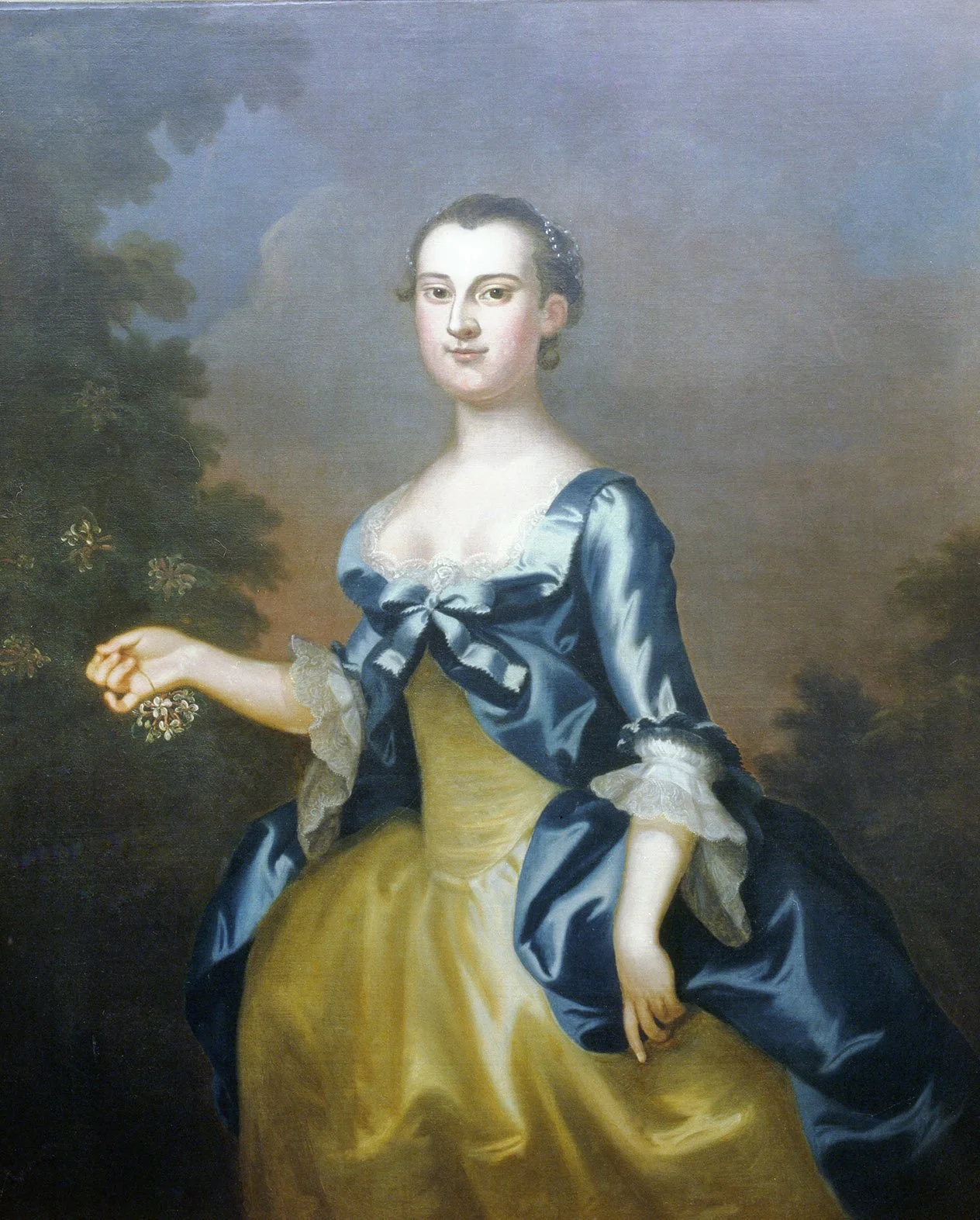
Marth Dandridge Custis Washington, 1757
Not too long ago, that’s a question nobody would have thought to ask. Older paintings show Washington standing over women in poses of regal authority. He looks on them from a distance—maybe daring to touch hands in a formal dance—but always with respect. In the twentieth century, though, some revisionist historians argued that Washington had a “problem” with women. That he was a cheater. A brute.
Read on to see what I think.
Love Affairs
George was a typical teenager. He liked girls. He flirted with sixteen-year-old Mary Cary Fairfax, whom he dubbed “a very agreeable Young Lady.” He also yearned for a mysterious “Low Land Beauty” who inspired a “troublesome Passion” in his heart and whose identity tantalizes historians to this day. Another sixteen-year-old named Betsy Fauntleroy cut George to the quick by passing a “cruel sentence” upon him that caused him to mope for weeks.
When he was twenty-three, George returned from frontier service to discover a letter from three beautiful young women from Belvoir—Sally Fairfax, Ann Spearing, and Elizabeth Dent—demanding that he visit them immediately. Otherwise, they swore, they would walk all the way to Mount Vernon and impose the consequences of his neglect. “Our Presidents Were Real Men!” proclaimed the Brooklyn Daily Eagle in a 1927 article about the “handsome, dashing” Washington.
A Dark Side?
Even as the Brooklyn Daily Eagle was hailing George’s masculinity, two cynical historians named W.E. Woodward and Rupert Hughes wrote biographies in the 1920s suggesting that George didn’t just like women but that he couldn’t keep his hands off them—what the twenty-first century would call harassment. And if women rejected or mistreated him, he was prone to fits of rage. Hughes repeated a true story of two girls who stole the clothes from eighteen-year-old George while he swam in the river, and pointed out how he humorlessly had them arrested and punished.
At my frequent public talks about Washington, I often get questions about Sally Fairfax. She was the wife of one of George’s best friends. Washington wrote a number of yearning, suggestive letters to her, some just a few months before he married Martha Dandridge Custis in January 1759. Did George and Sally carry on an affair, even after George and Martha were married? I get the sense that some people hope it’s true.
Worst of all, many people seem to have the sense that George didn’t love Martha, and that she was an obsequious drudge. I often hear that he married her just for her money—Martha was a wealthy widow—as if she was an overripe fruit waiting to be plucked and had no truth in the matter.
So is it all true? If George lived in the twenty-first century, would he be publicly shamed as a womanizer.
George’s Women—and Women’s George
Well, no. Or yes. Truth is, it depends on your standards. George Washington certainly had youthful love affairs, but we’ll never know how far they went. Of course, other unmarried young men and women had affairs in the eighteenth century, but with George for some reason that doesn’t seem to count.
Did he have some kind of a liaison with Sally Fairfax? Yes. Was it platonic or physical? We’ll probably never know, though his memory of “a thousand tender passages” suggests they at least kissed. Did they continue their affair after George married Martha? Almost certainly not. There’s no evidence for it, and two major points against the idea.
First, George Washington was absolutely paranoid about his reputation and averse to any risk of besmirching it. An extramarital ruined Alexander Hamilton, and would have ruined Washington as well.
Second, George loved Martha, and she him. They chose each other. Although she burned most of their letters after he died, enough remain to show that they loved each other deeply at the beginning, in the middle, and at the end. (What woman after twenty years of marriage sends her husband the equivalent of a shopping list and addresses it “my love?”—Martha Washington, that’s who.
Conclusion
Even people trying to compliment Washington like to argue that women found him dashing, handsome, and a good dancer—and that they admired his uniform and his power. I don’t think that’s much of a compliment, and I also don’t think it’s the basic truth. Going out on a limb, after twenty years of editing and studying his papers, I’d say that Washington’s best friends were always women (not Lafayette, and definitely not Hamilton). They liked him because he spoke to them respectfully, confided in them and trusted them. Martha played this role, but so did women like Eliza Willing Powel, in whom he regularly confided (and no, they did not have an inappropriate relationship), and who convinced him to accept a second term as president of the United States.
No president—no Founding Father—respected women more than George Washington.