George Washington @ 250: Gout, Gunpowder, and (No) Gumption
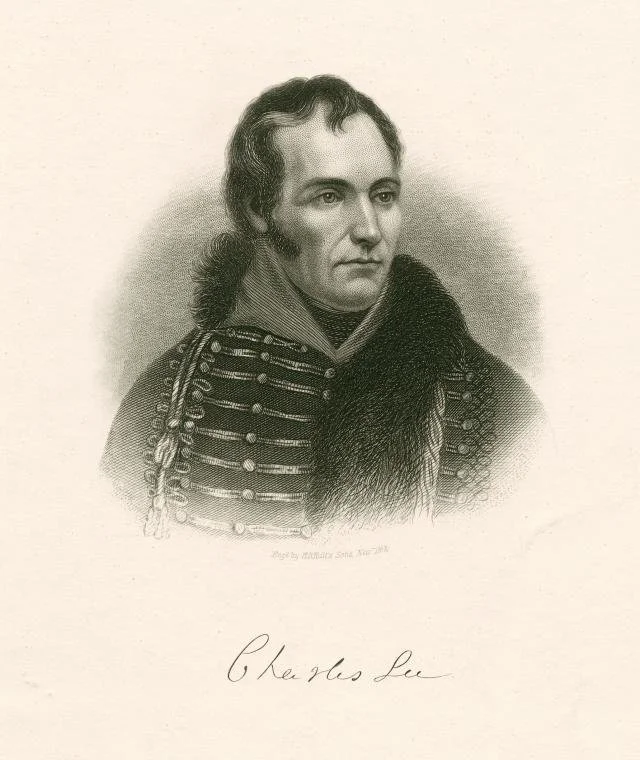
Charles Lee - New-York Historical Society
A Strategic Imperative Imperiled by Gout
Colonel Henry Knox’s so-called “Noble Train of Artillery,” carrying vital artillery pieces from Fort Ticonderoga after an epic journey, arrived in Continental Army Commander in Chief George Washington’s camp at Cambridge, Mass., on January 27, 1776
Washington invited Henry Knox and his wife Lucy Flucker Knox to headquarters on February 1 for a celebratory dinner. Otherwise, he barely thought about the guns or what he might accomplish with them. Instead, Washington was steeped in doubt as he managed his army of 20,000 men. British forces remained ensconced in Boston, apparently immovable, and Washington did not see any immediate prospects of rousting them. Colonel Benedict Arnold continued to hover outside Quebec, his army on the verge of dissolution despite Washington’s frantic calls for reinforcement and demands for one last effort to storm and capture the city.
Now, too, Washington had to worry about New York City. Already, he anticipated efforts to capture the place. He had recently decided to dispatch his most militarily experienced and apparently most capable senior officer, Major General Charles Lee, to New York to inspect its defenses; but that worthy had come down with a severe case of gout, although he defiantly declared he’d still go to New York even if he had to be carried all the way there on a stretcher.
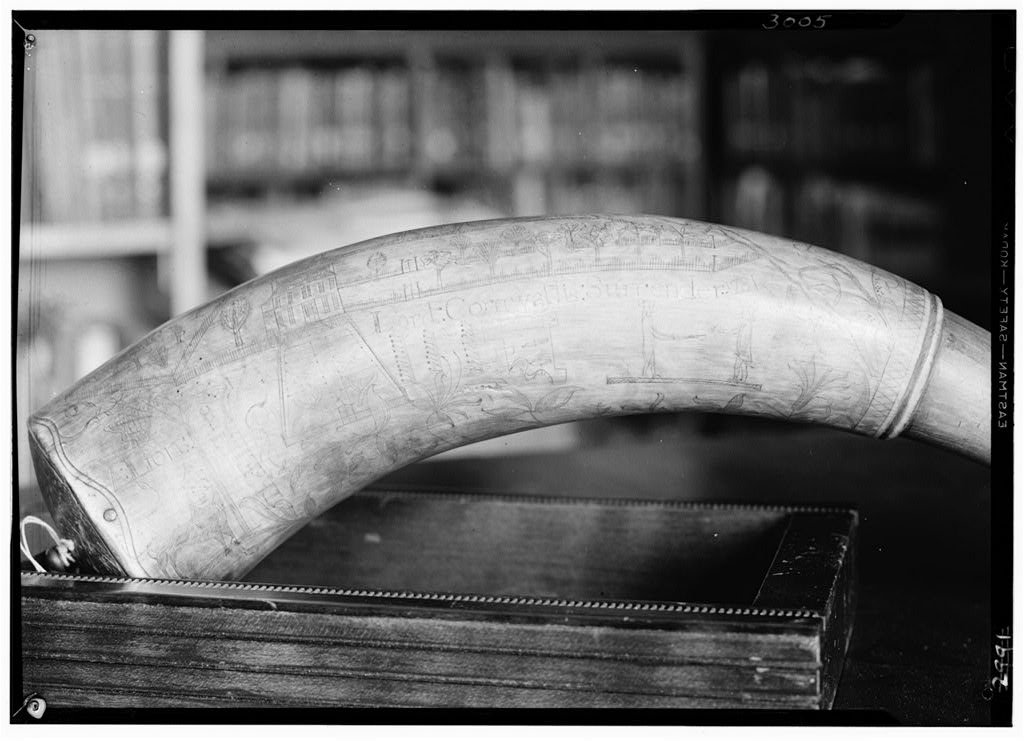
Revolutionary War Powder Horn - Library of Congress
Powder! More Powder!
Nothing tormented Washington more than the lack of sufficient gunpowder. Without it, all the muskets and artillery pieces in the world—including the ones Knox had brought from Fort Ticonderoga—would avail him nothing. For months he had been exhorting New England state governors and officials to send all they could spare to supply Washington’s army. But as soon as it arrived, the powder seemed to disappear—not evaporating into smoke, but melting into gooey slop.
“Whilst the men lay in bad Tents,” Washington sadly informed President of the Continental Congress John Hancock, the powder they possessed “was unavoidably damaged by severe & heavy rains, which could not have been prevented, unless It had been entirely withdrawn from them, and an Attack hazarded against us without ammunition in their hands.” And even when it didn’t rain, careless Continentals and militiamen spilled powder in the mud or snow, or fired it off just to test their muskets.
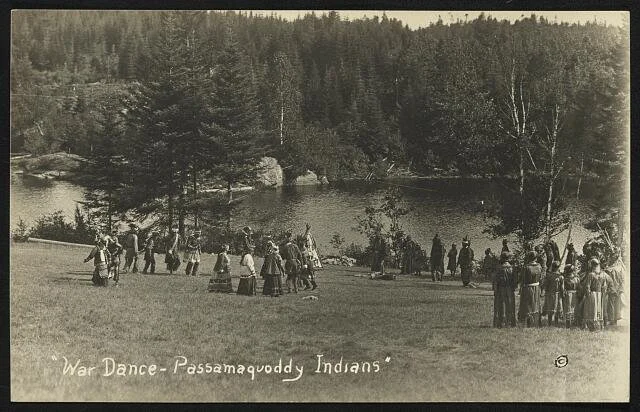
Early 20th Century Passamaquody Gathering - Library of Congress
Native American Guests
On January 31, a delegation of “sundry Sachems & Warriors” of the Caughnawaga, St. Johns, and Passamaquoddy Indian tribes of Canada visited Washington’s camp in order to “Inquire into the cause of the Quarrel between the people of England & Our Brothers in this Country.” They also presented the commander in chief with a peace treaty they had concluded with New York Major General Philip Schuyler, for Washington’s signature.
When Washington duly complied, the Indian delegates proclaimed: “We are very glad that a firm peace is now made between us & our Brothers—we now look upon ourselves to be free & like our brothers of New England. . . . The English people are mad & very cross & want us to fight against the New England people,” they continued, but “God is on the side of our Brothers and they will beat them.” Washington treated his “friends” kindly, and wrote back to Schuyler about how pleased he was with their visit.
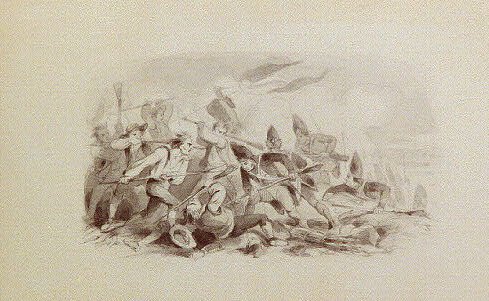
Revolutionary War battle - Library of Congress
Failures of the American Fighting Man
Finally, Washington had to worry about whether American fighting men were truly up to the struggle with Great Britain. It seemed they lacked gumption, and news of their behavior in the failed attack on Quebec appeared to confirm his worries. Militia especially seemed unreliable. “Place them behind a Parapet,” he told his friend Joseph Reed, “a Breast Work—Stone Wall—or anything that will afford them Shelter, and from their knowledge of a Firelock, they will give a good Acct of their Enemy, but I am as well convinced as if I had seen it, that they will not March boldly up to a Work—or stand exposed in a plain. . . . The Men must be brought to face danger—they cannot allways have an Intrenchment, or a Stone Wall as a safe guard or Shield.”
This convinced Washington that Boston must be captured—and fast, before the Continental Army fell apart, since the men apparently lacked staying power. “It is of essential Importance that the [British] Troops In Boston should be destroyed if possible before they can be re-inforced, or remove,” he told Reed, “this is clearly my opinion—whether Circumstances will admit of the tryal—& if tryed what will be the Event, the allwise disposer of them alone can tell.”
Ironically, it was these doubts about his troops, rather than any sudden insights about Knox’s “Noble Train of Artillery” and what he could use it for, that would impel General George Washington to take his fateful, now historic next steps.