The Battle of Staouëli, June 19, 1830, Begins the Wars for North Africa. Lions of the Atlas
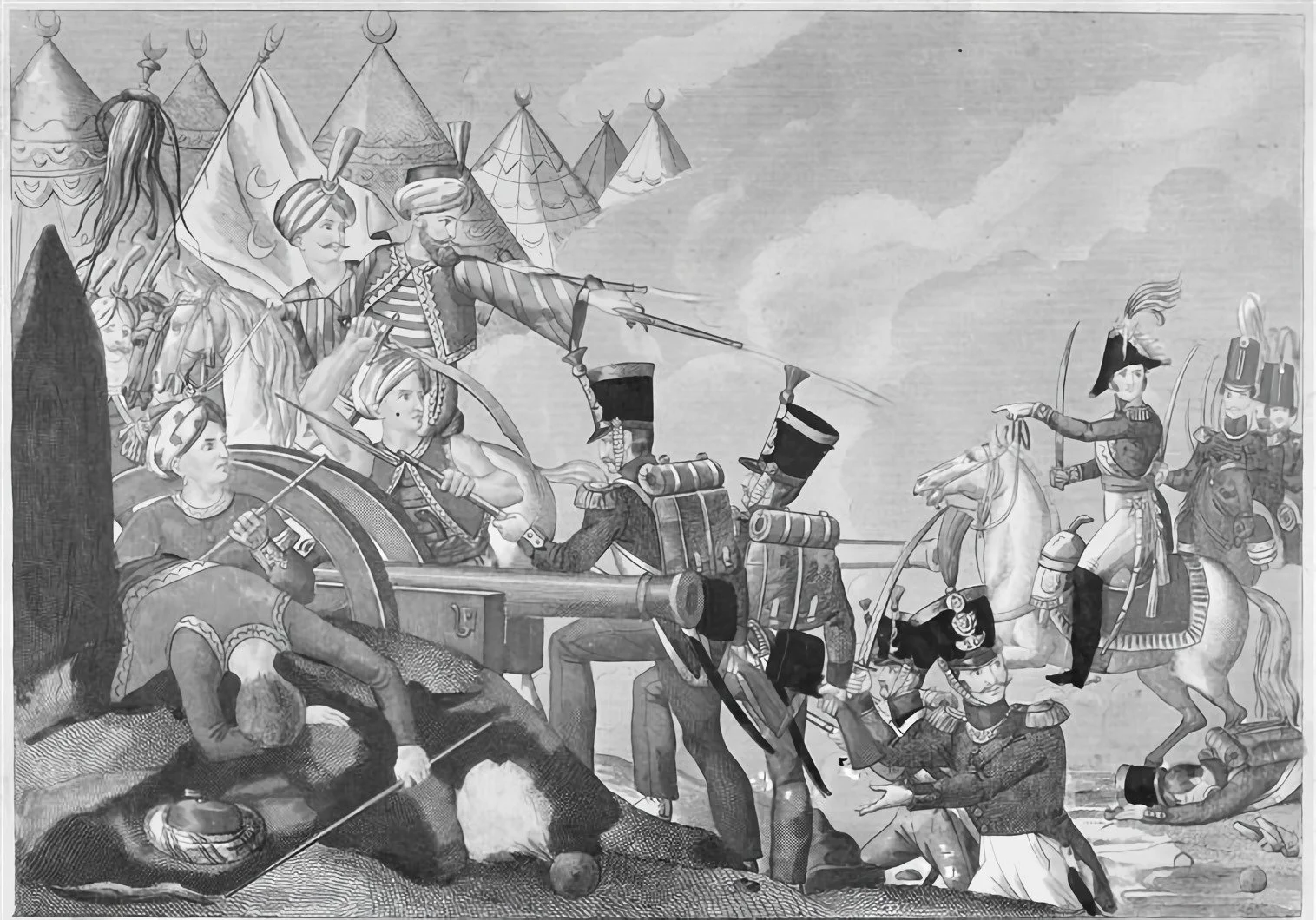
Bataille de Staoueli (Wikimedia Commons)
“We Will Beat Them”: The Battle Begins
The French amphibious expedition that landed on the coast of Algeria at Sidi-Ferruch on June 14, 1830 quickly ran into serious trouble. After capturing several Turkish-crewed artillery pieces, French forces hunkered down as a heavy storm battered the coast, scattering the supply vessels upon which they relied. The storm abated by June 18, but that afternoon a large Turkish-Algerian army estimated at 27,000 men had deployed just to the east, ready to attack. Although he could only field about half that number of soldiers in his forward defenses, the French commander, General de Bourmont, was confident. “I am delighted to see them arrive,” he said; “we will beat them all at once.”
The Battle of Staouëli, the first in a century-long series of major battles and campaigns as France sought to conquer western North Africa, was about to begin.
The attack began at dawn on June 19. Three divisions of Turkish and Arab cavalry and infantry, including janissaries, militiamen, and tribesmen, struck at Bourmont’s right, center, and left. On the right, Comte Nicolas de Loverdo’s troops faced a determined assault as attackers debouched from rocky bluffs and fearlessly engaged his makeshift defenses. Backed by howitzers, rampart guns (crude heavy weapons designed to assault European fortresses) and the guns of a steamship offshore, the French beat back this assault.
On Loverdo’s left, General Charles de Damrémont’s brigade maintained discipline and opened fire on the attackers at close range in withering volleys of musketry that devastated the Algerians, leaving dozens of them dead along a streambed. Unbroken, however, the attackers withdrew some distance and opened fire on the French positions, inflicting increasing casualties.
On the left of the French line, meanwhile, Bourmont’s entire position threatened to unravel as the Algerians, led by the Dey of Algiers’s son-in-law Ibrahim, threatened to drive a wedge along the coast, pushing the French inland and away from their bridgehead at Sidi-Ferruch.
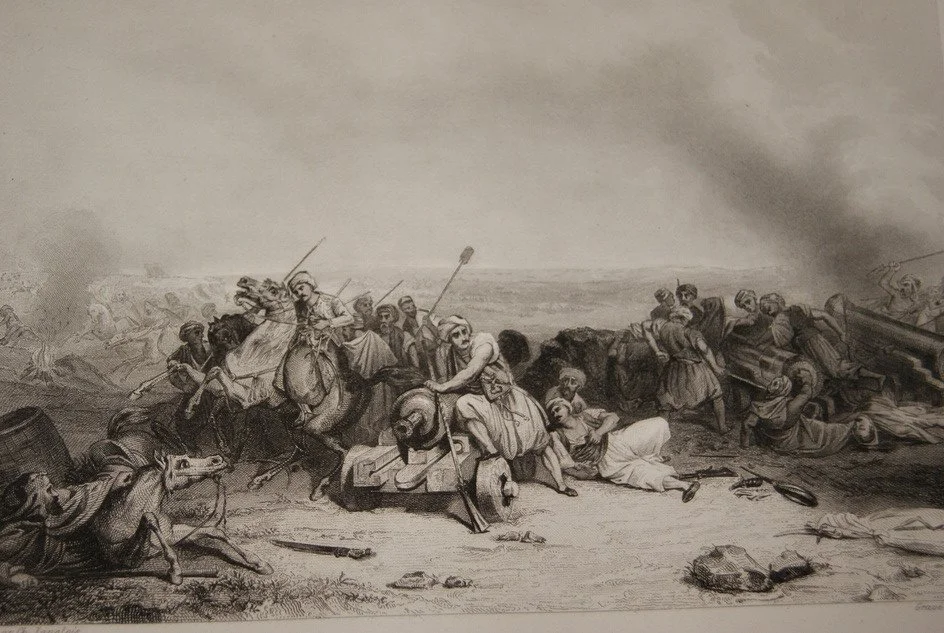
The Battle of Staoueli (Palace of Versailles)
The Battle of the Dunes
Confusing pre-battle orders and counter-orders reduced the French left flank, commanded by Baron Pierre Berthezène, to disarray. The French 28th Line Regiment, loosely deployed on a hillock and among coastal sand dunes, was caught unprepared as Ibrahim’s infantry and cavalry burst out of the morning fog and penetrated the defenders’ positions at multiple points. Near chaos ensued as small groups of French infantrymen withdrew into isolated groups, attacked on all sides in close quarters fighting. Battle cries, with screams of the wounded and dying, echoed among the dunes amid the clash of bayonets and swords, and the rattle of musketry.
As the attack began, French forces had begun withdrawing from a hillock that anchored their position above the dunes. Ibrahim’s janissaries stormed this height, engaging French rear guards and a couple of howitzers, still emplaced, whose crews frantically fired grapeshot. French soldiers who had just abandoned the hillock turned and tried to reoccupy it, battling the Turks around the guns.
At the last moment, just as Bourmont’s position seemed set to crumble, a French reserve brigade appeared, infantry assaulting in tight columns among the dunes, and lending their weight to the effort to recapture the hillock. Ibrahim’s men didn’t flinch from the counterattack, but engaged it head on, fighting bitterly to maintain their momentum. But the Algerians had lost cohesion, and the disciplined French, displaying steadiness and determination despite heavy casualties, pried back the attackers and finally broke them. French warships opened fire on the Algerians as they withdrew, wreaking terrible slaughter.
The first effort to throw the French invasion force back into the sea had come within a whisker of succeeding. And the war would only intensify from here. For more on the Battle of Staouëli and the spectacular battles and campaigns for North Africa, Morocco, Algeria, and Tunisia, see my new book, Lions of the Atlas: France’s Wars for Empire and Resistance in North Africa, 1827-1934.