The Ride from Boston to New York, April 1776: George Washington @ 250
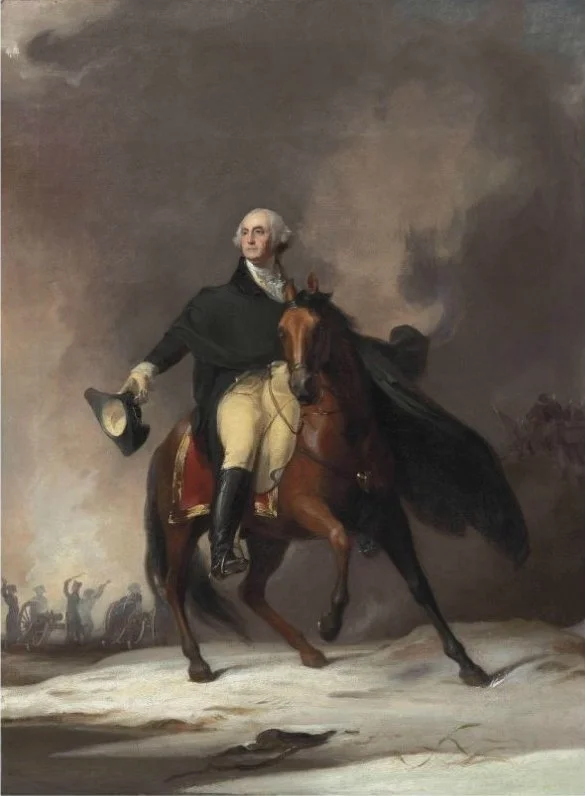
Thomas Sully Portrait (1842); Private Collection from Wikipedia
A New Battle Front
In the summer of 1775, newly minted Commander in Chief George Washington traveled from Philadelphia to New York City and then to Cambridge, Massachusetts, where he assumed command of the Continental Army outside Boston. Feted everywhere, he was tormented by foreboding as he considered the challenges facing him.
By April 4, 1776, as he prepared to retrace his steps as far as New York, Washington had passed his first test following the British evacuation of Boston on March 17. His mind, though, was no more relaxed than it had been nine months earlier. The British would return, in force. Washington believed they would land at or near New York City. And, so far as his initial scouts and surveys had indicated, the Americans stood little chance of stopping them.
Still, first things first. George’s beloved wife Martha, accompanied by her son and his stepson John Parke Custis and his wife Nellie Calvert Custis, had shared his lodgings at Cambridge. They would join him in New York; but he insisted that they make the trip by a safer inland route, via Hartford and New Haven. Punctilious as always, George made sure to charge their expenses to himself, rather than to his public expense account. He, meanwhile, followed the road his troops had taken and were even now marching, via Providence, Norwich, and New London, before presumably joining his family at New Haven just before entering New York.
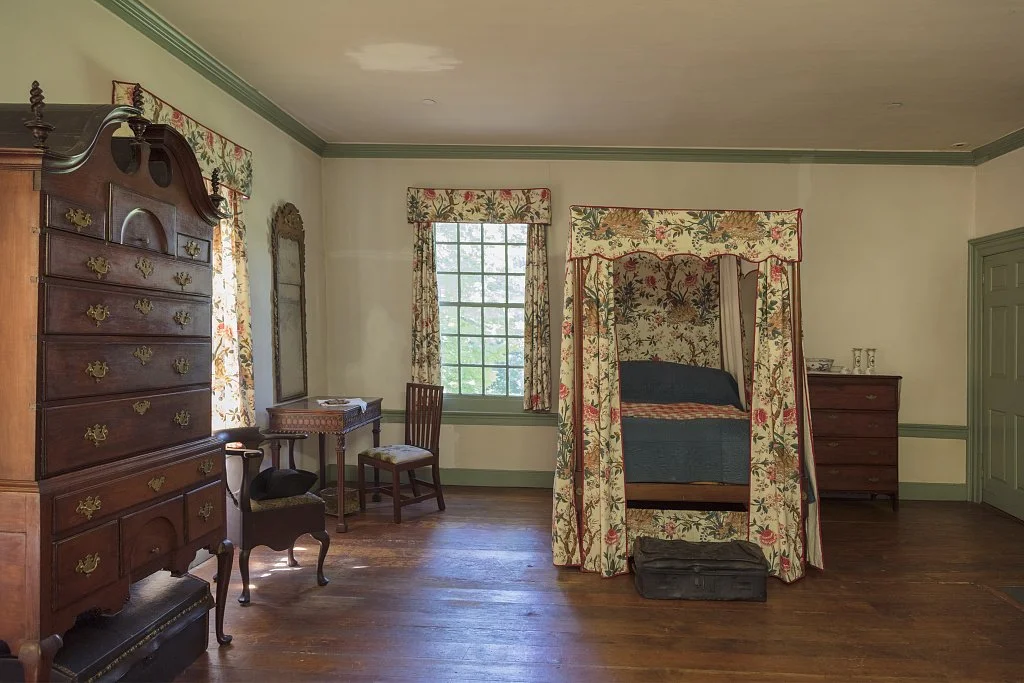
George Washington’s Bedroom at th Ford Mansion, Morristown, New Jersey (Library of Congress)
George Washington Rode, Dined, and Slept Here
Washington’s letters from April 4-13 are sparse, and his accounts not always specific. Evidence suggests, however, that he proceeded at anything but a gallop, accompanied by his aides-de-camp William Palfrey and Stephen Moylan, along with Adjutant General Horatio Gates. Gates would morph into a rival and enemy within a year, so it’s hard to imagine their conversation during their week’s journey from Boston to New York being particularly friendly.
On the morning of April 4 Washington rode into Boston, had a “snack,” and then proceeded to Dedham, Massachusetts, where he stayed at a tavern owned by Nathaniel Ames. On the next day he rode through Wrentham, Massachusetts, and arrived that afternoon at Providence, Rhode Island, where the gentlemen of the town treated him to a formal dinner. On April 7 he continued toward Norwich, where he arrived on the following day, supping with Jabez Huntington at his home and meeting with Connecticut Governor Jonathan Trumbull, Sr. By April 9, Washington was at New London.
New London was by 1776 becoming an important base for American privateer vessels preying upon British merchant shipping. Washington had himself invested in privateering. In September 1781, turncoat Benedict Arnold would raid New London to punish the place for its involvement in privateering; but in 1776 American merchants and sailors still had smiles on their faces. Washington met with American Commodore Esek Hopkins aboard the warship Alfred, looked over New London’s coastal defenses, and then stayed the night with merchant Nathaniel Shaw, Jr.
Local legends about the Commander-in-Chief’s ongoing passage would linger for generations, with stories that he had slept at this or that place, been seen riding along the road, or stopped to chat with ladies or received gifts from children. Whatever the truth of these tales, he continued via Lyme, and across the Connecticut River to Saybrook before arriving at New Haven on the morning of April 11. Washington’s family didn’t meet him there—John Parke Custis had fallen ill (he would recover)—but George had no time to tarry. Instead he continued via Fairfield and Greenwich into Westchester County, New York where, though he had no way of knowing it at the time, he would fight an important battle at White Plains at the end of October, 1776. On this occasion, he crossed King’s Bridge onto Manhattan Island, riding south into the city, where he arrived on April 13. Martha and her son and daughter-in-law would join him there on April 17.
Just over two months would pass before Washington found himself on the verge of major battles that looked certain to determine the fate of America.