The Silence
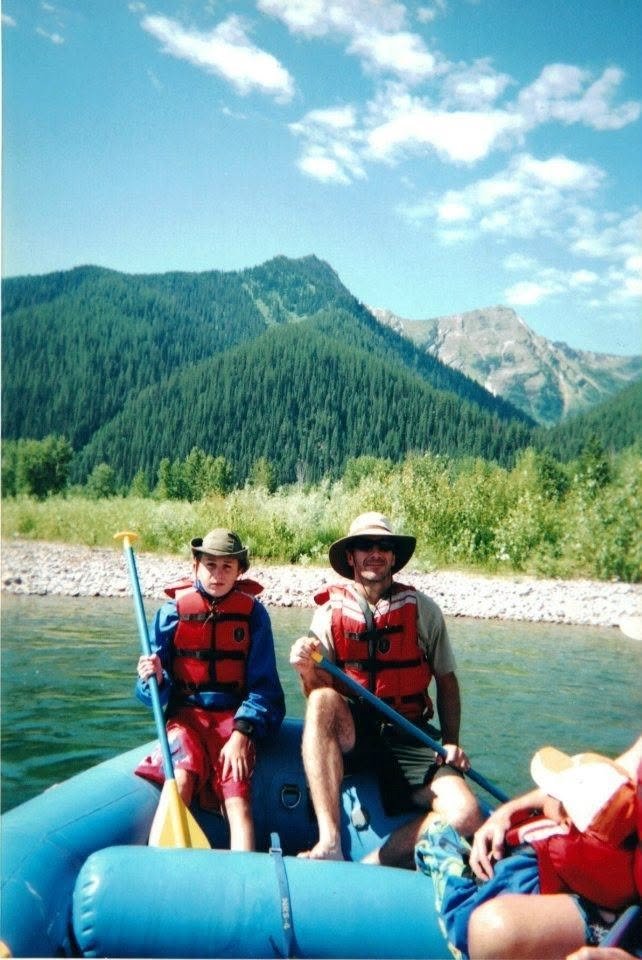
Flathead River, Montana, 2005 (Personal photo)
Loss
The hardest thing about losing a loved one is the trailing silence. But it’s only in emptiness that healing can be found.
Grief counselors recommend processing pain through words: single or group therapy sessions, journaling, writing poetry. Many people have found these creative pathways valuable. Personally—despite my profession as a writer—they have never helped much. My oldest son Mike, who ended his own life on July 30, 2021, certainly suffered from isolation during the COVID lockdowns. Cannabis-induced psychosis also may have struck him. But loneliness and weed didn’t cause his death. More than anything, I think, it was words—hurtful; manipulative; seductive; mostly those of allegedly loving but actually predatory family members and friends, but also his own—that ended his life.
I had no appropriate words to cope with his death. I tried, early on, but they were all off base. Two years after his passing, I still had nothing useful to say to anyone, including myself. I felt, but could not articulate, the impact that the weight of his loss was having on my ability to give my wife and two young daughters the love and support they deserve.
Confronting, and walking through the silence seemed at last to be the only way forward. I resolved to take some form of trip to trace that path; but it took me a while to conceptualize it.
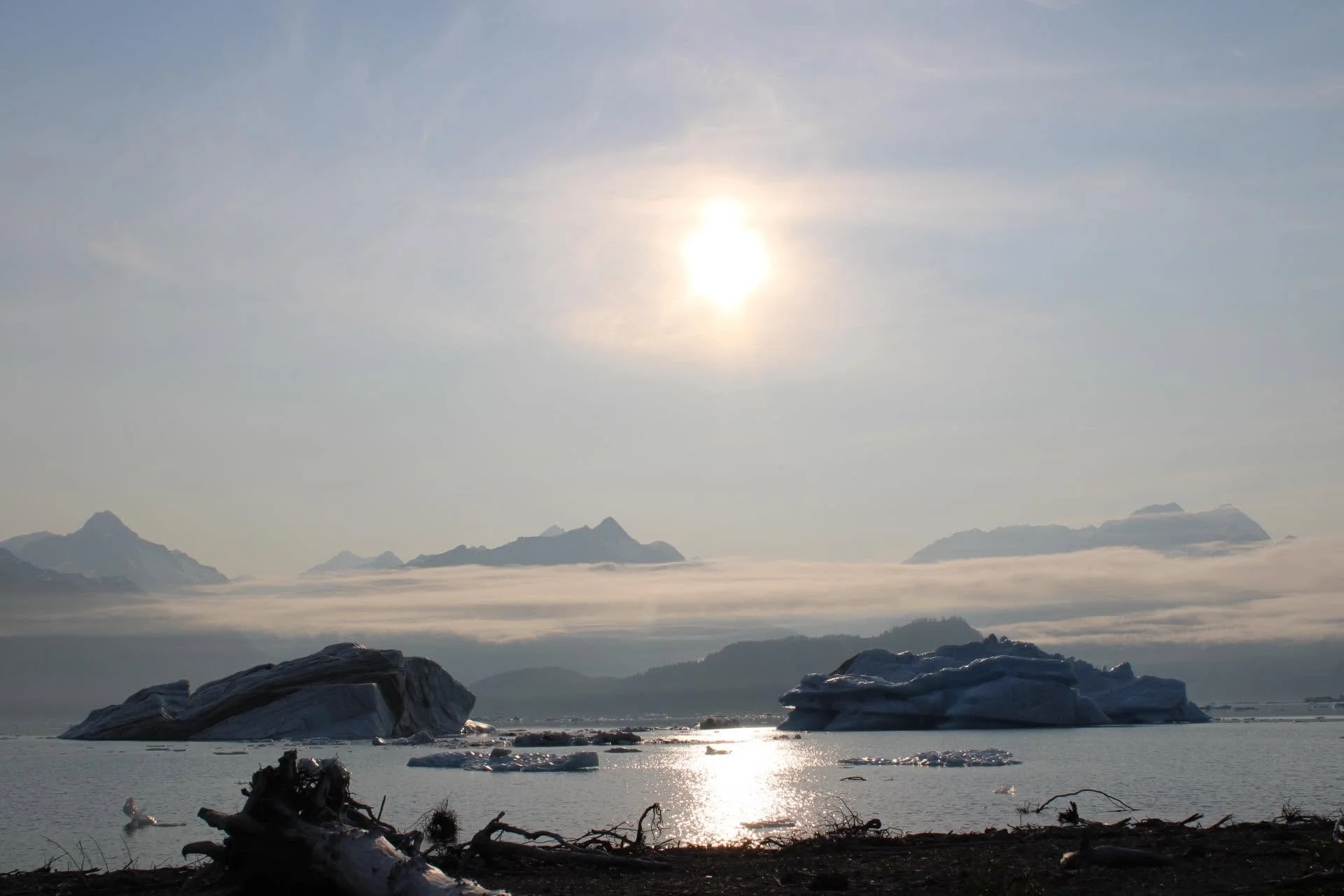
A moment on the Alsek (personal photo)
Departure
I’ve travelled a lot, but never easily. Deeply agoraphobic, I invariably have to fight off feelings of doom before boarding a flight. Hiking, however, has always soothed me. In the autumn of 2015, my treks of the Hadrian’s Wall Path and the West Highland Way in the United Kingdom—both of which I nearly abandoned because of my phobia—helped me navigate an especially rough period in my life. Mike, embroiled in problems of his own, not unlinked with mine, had taken some hikes with me; but whitewater rafting trips in Montana and West Virginia, and a biking trip in Nova Scotia, had truly brought us together in his childhood.
With these experiences in mind, and consulting YouTube videos and travel literature, in 2023 I crafted a journey in three parts. First, I would raft the Alsek River from Canada to Alaska for two weeks. Next, I would hike Peru’s Huayhuash mountain range for another two weeks. Finally, I would return to the trails of Scotland and England—this time, by trekking the coast-to-coast Great Glen Way, and then following Offa’s Dyke Path that traces the often remote borderlands of England and Wales. Necessity—I’m no skilled river man, or mountaineer—dictated that I take the first two trips with small groups and expert guides. I didn’t think these would undermine my search for quiet solitude (I was wrong). In the U.K., though, I would spend a month walking alone.
Precisely planned, my expedition was psychically pathless. I knew I wanted silence and solitude; that’s all. Fanatical reader though I am, I also fled—for the most part—the allures and torments of words. My only literary companions were a battered century-old Modern Library edition of the Poems of William Blake edited by William Butler Yeats, and a slim volume titled A Time to Keep Silence by the English travel writer Patrick Leigh Fermor. Both were semi-random selections. I’ve never read much poetry, but I had heard of Blake’s intensity and the volume was pocket-sized so in my pack it went. I picked Fermor’s book for the title—and likewise because it was light.
Though skeptical of journaling as therapy, I kept a travel journal. My intention was not to process my feelings through writing, but simply to record events and sensory impressions. Inside the back of the journal I taped a photo of me and Mike in happier days. I knew only that I would lay it somewhere along the path and say goodbye.
The Alsek River trip offered an opportunity for me to raft with Mike one last time. But group dynamics were a problem. “Trying to restrain myself from being aloof on one hand or blabbering on the other,” and also “trying not to be self-centered,” as I wrote in my journal, I spent too much energy wearing a face. And it quickly crumbled. Early on, a kindly guide nicknamed me “Stoic.” The moniker didn’t stick. People could tell I was off center, not happy; and they went from evading to actively shunning me. I note this without self-pity. Who could blame them? They probably were right. They wanted to enjoy their vacations, and I wasn’t good company.
Internally, though, I found a path. Blake helped mark it. His narrative poem Tiriel probes the title character, a father engulfed with grief, whose pain tragically curses and destroys his own children. Hand in hand with despair, he journeys blind, “the wanderer who seeks the woods leaning upon his staff.” I became absorbed in this searing, unforgiving narrative. At one point, walking alone among thickets of skeletal driftwood on the Alsek’s banks, not far from bobbing, spectral, deep-blue blocks of ancient glacial ice, I called to mind the image of Tiriel’s brother Ijim lifting and carrying the blind man upon his shoulders—and decided that I would lift Mike upon my shoulders and carry him onward until it was time to rest. I could imagine no more paternal gesture.
I spoke tenderly with Mike there along the shore, and silently lifted him up, as I had done so many times when he was a toddler. It felt equally real this time.
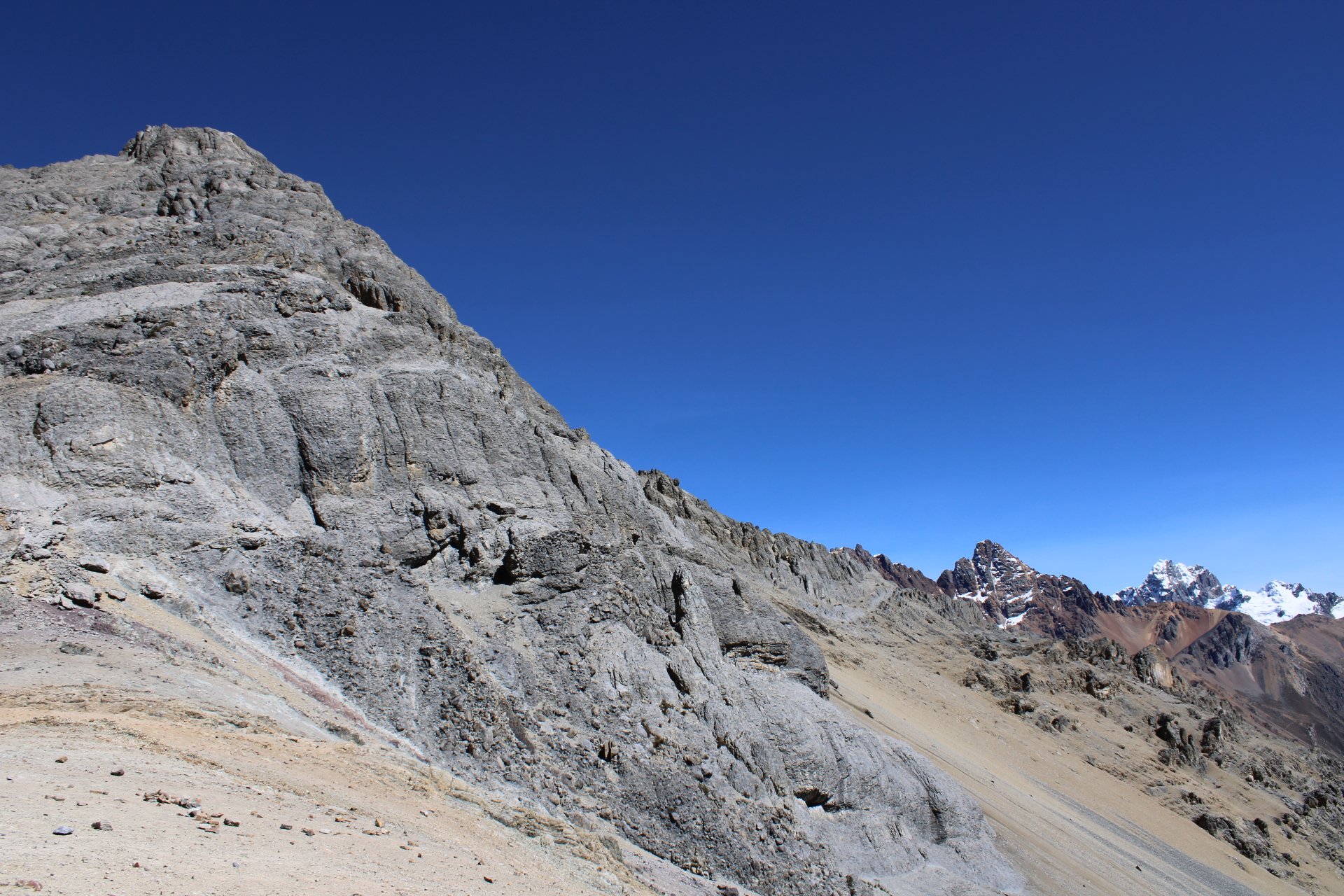
Santa Rosa Pass, looking toward the point of Mike’s departure (personal photo)
Leavetaking
His weight felt real, too, and during the very tough second-stage expedition in the Huayhuash, I often felt bowed down, near collapse. Still, I thought that the time to rest would not come until somewhere along the third-stage path in the U.K. It arrived sooner. In Peru, I again struggled with social interaction. But I learned to keep my ears open inwardly. There was an unspoken dialogue with my son, and with the world around us, silent words I can neither share nor forget. Halfway through the hike, climbing the Santa Rosa Pass at just over 16,500 feet, came a rush of wind, a break in the clouds, and I knew the moment had come. Scuttling alone via an unemblazoned pathway along the adjoining ridge, away from my companions, I found a secluded place and laid the photograph.
I took Mike down from my shoulders, hugged and kissed him, said goodbye, and watched my boy wend his way off into the mountains.
There—not from his friendless deathbed, or from his barren grave, stained with empty symbols and testaments chosen by the same people who had preyed upon him in life—at a spectacular mountain pass, surrounded by sparkling majesty that reflected the beauty of his soul, is where Mike departed the Earth.
Later, over the torn page that had once mounted Mike’s image, I carefully placed a photo of my little daughter Freya, her eyes shining with innocence and hope. A picture of her baby sister Maeve, groping toward love, soon settled by Freya’s side.
Only when these rituals concluded did the silence descend, haunting, strong and pure.
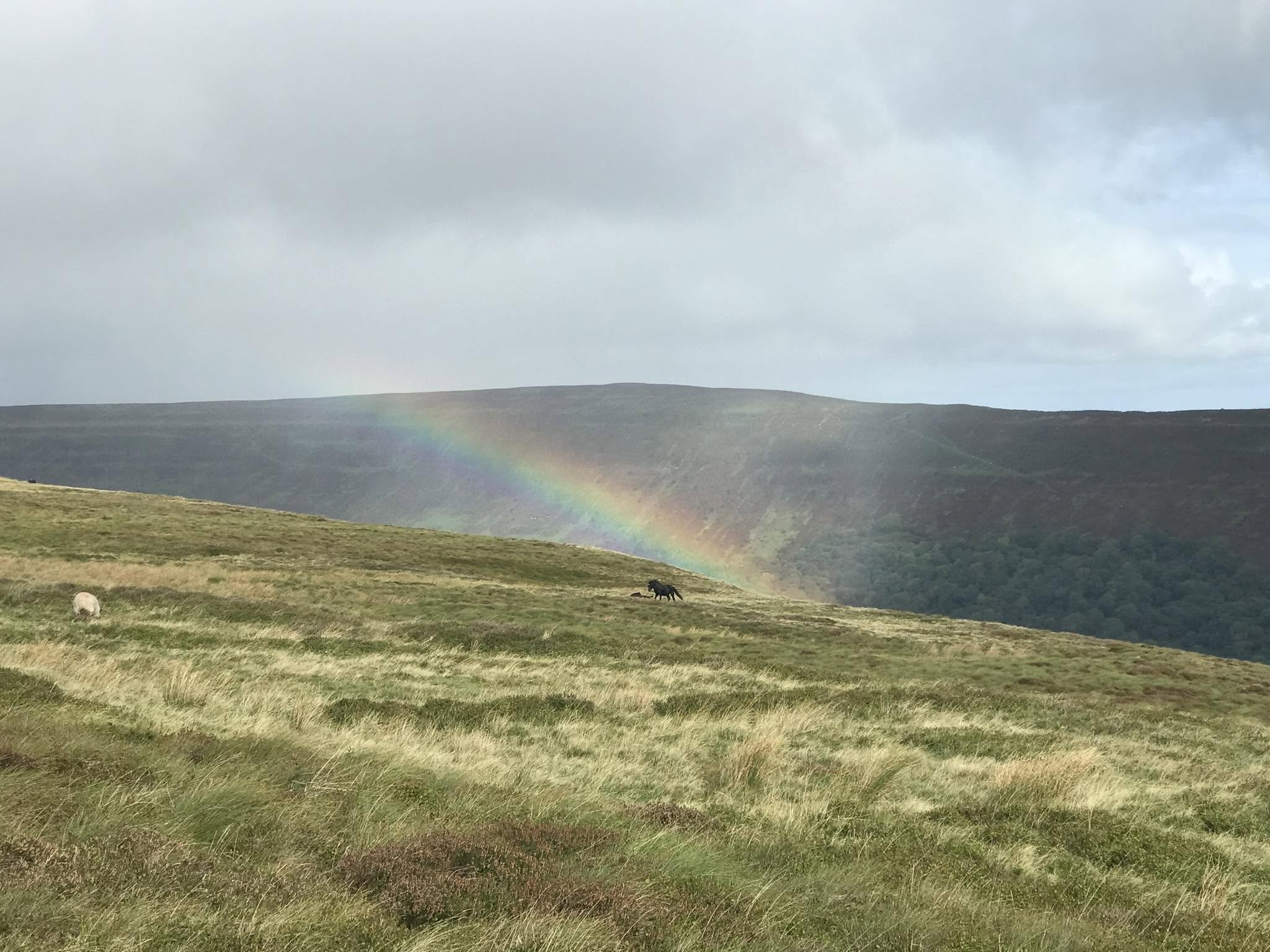
Offa’s Dyke Rainbow (personal photo)
Rainbow
Offa’s Dyke isn’t an easy path. After completing the Great Glen Way, I trekked its nearly 200 miles from south to north (with detours deliberate and inadvertent) in the autumn, pelted with rain, slogging up to twenty-five miles a day through rugged country. But I met almost no one else. And the impressions were deep, and rich: rain’s patter; cold watery threads piercing my inadequate poncho; a washed-out bridge bisecting the path in isolated country reputedly haunted by witches, forcing an extensive bushwhacking detour; the pungency of earth and manure; wind blowing mist; hopping pheasants; salty crows; sullen muddy cows; a patrol helicopter hovering menacingly over me as I trudged in my poncho (my pack forming a sinister bulge underneath) past a quarrying operation targeted by eco-activists; the taste of stolen cider apples. Like Blake’s Thel, dolorous daughter of the Seraphim in his Book of Thel, I “wandered in the land of clouds, through valleys dark, listening.”
Thel, incapable of appreciating beauty through knowledge of its inevitable passing, takes lessons in perspective from a lily, a cloud, a worm, and finally a lump of clay. I encountered them all. And all things pass, but not without purpose. A cloud imparts lessons to Thel by descending from the sky; in my case, after a harrowing ascent of Hatterrall Hill in Wales, a cloud spoke to me by lifting, dissipating, dying, to reveal a sparkling rainbow over a pair of frolicking wild horses. The clarity this imparted to my mind didn’t smudge even as I slid on my rear through the mud while descending the hill’s other side.
Through “the solemnity of ritual and long solitary walks in the woods,” writes Fermor in the introduction to his chronicle of visits to some of Europe’s great monasteries, “the troubled waters of the mind grow still and clear; and much that is hidden away and all that clouds it floats to the surface and can be skimmed away; and after a time one reaches a state of peace that is unthought of in the ordinary world.”
True; yet journey’s end brought no epiphany, no awakening to some hidden universal meaning that made sense of loss. The world’s best thinkers, greatest explorers, artists, and spiritual leaders, still struggle with it; why shouldn’t I? My burden, though, was profoundly lighter for the experience. I could refocus away from the past to the present and the future. I rediscovered love.
Some of the benefit undoubtedly surfaced in ritual. I had devised my own, via some instinctive sense of the importance of carrying a burden, setting it down, and letting it dissipate. It wasn’t an expiation so much as a catharsis, or release. Yet the vision of my son’s departure wasn’t illusory or self-generated. I had watched him gambol off among the crags, as surely as anything I’ve seen in a lifetime, until I lost sight of him—whether gone, or simply obscured from vision, I cannot know.
The final irony is that only by walking through the silence was I able to rediscover the power of words and elicit their meaning. My restless mind has always been too impatient for poetry. I’ll probably not read much of it again. In silence, though, Blake’s poetry—and Fermor’s prose—interlaced delicately with my thoughts in ways otherwise inconceivable. In silence, finally, words brought my senses to life.