Royal Irish Rifles, Suvla Bay, Gallipoli and Greece, 1915-1917: Great War Memoirs, Short Reviews

Landings at Suvla Bay, August 7, 1915 (Imperial War Museums)
A Review of Forward the Rifles, by David Campbell (2009)
During World War I, Ireland remained part of the Kingdom of Great Britain and Ireland, although the Home Rule controversy came close to inciting civil violence and military mutiny just before the Great War began in August 1914. Many thousands of Irishmen, Catholic and Protestant alike from all parts of the island, served in Irish regiments of the British Army. Indeed, the 1916 Easter Rising in Dublin initially was extremely unpopular with Irish civilians for that very reason.
David Campbell (1887-1971), a Protestant Irishman of Scottish heritage and a student at Trinity College who lived at Crinstown in County Louth, did not hesitate to take a lieutenant’s commission in 1914 with the 6thRoyal Irish Rifles and served loyally throughout the war without questioning his commitment to king and country. His memoir,Forward the Rifles, written in 1968-1970 from his diary and so richer in detail than it would have been if he had compiled it from memory, presents a tough and unvarnished account of a harrowing term of service.
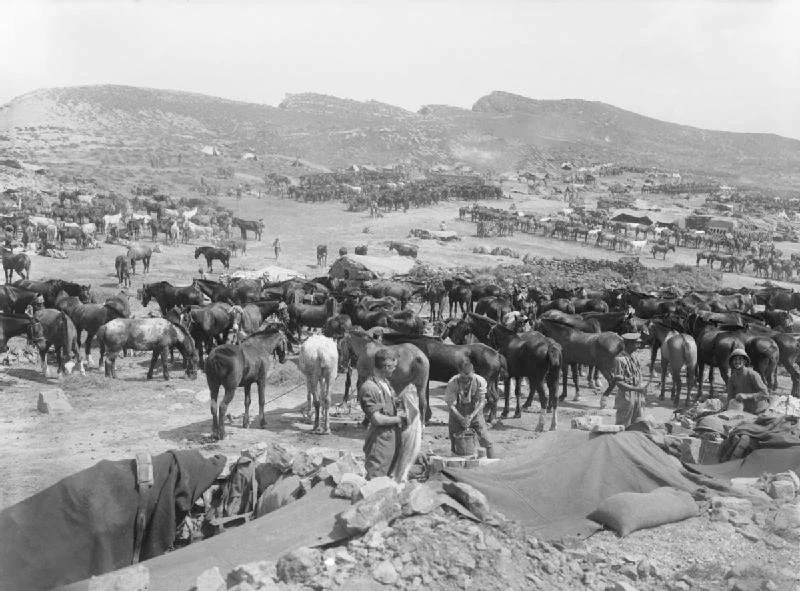
British Horse Lines at Suvla Bay (Imperial War Museums)
Suvla Bay, Gallipoli
Campbell’s battalion of the RIR departed for the Dardanelles in July 1915, enduring a dreary interval on the sunbaked, fly-infested island of Mudros before coming ashore at Gallipoli on August 6 as part of the ill-starred Suvla Bay landings. Campbell admits frankly, from his diary and hindsight, that he and his men were badly frightened, confused, and less than effective as they were hustled via Dead Man’s Gully toward Rhododendron Ridge and, on August 9, launched in a sanguinary and futile assault against well-entrenched Turkish positions.
Campbell never got close to the enemy positions. Shot three times in the same leg, he took shelter among the dead, dying, injured, and terrified riflemen, before attempting to make his way back alone to receive medical aid. His account of this journey is as powerful and affecting as anything I’ve read in World War I literature—not least, Campbell’s description of how a Gurkha soldier picked him up unasked, carried him on his shoulders most of the way back under heavy fire, and then disappeared before Campbell could thank him. Afterwards, Campbell suffered agonies just to get aboard a hospital ship, and then endured protracted hospital stays that nearly cost him his leg—lightened only by charity offered by the Countess of Carnarvon at Highclere Castle, converted into a hospital at her behest.
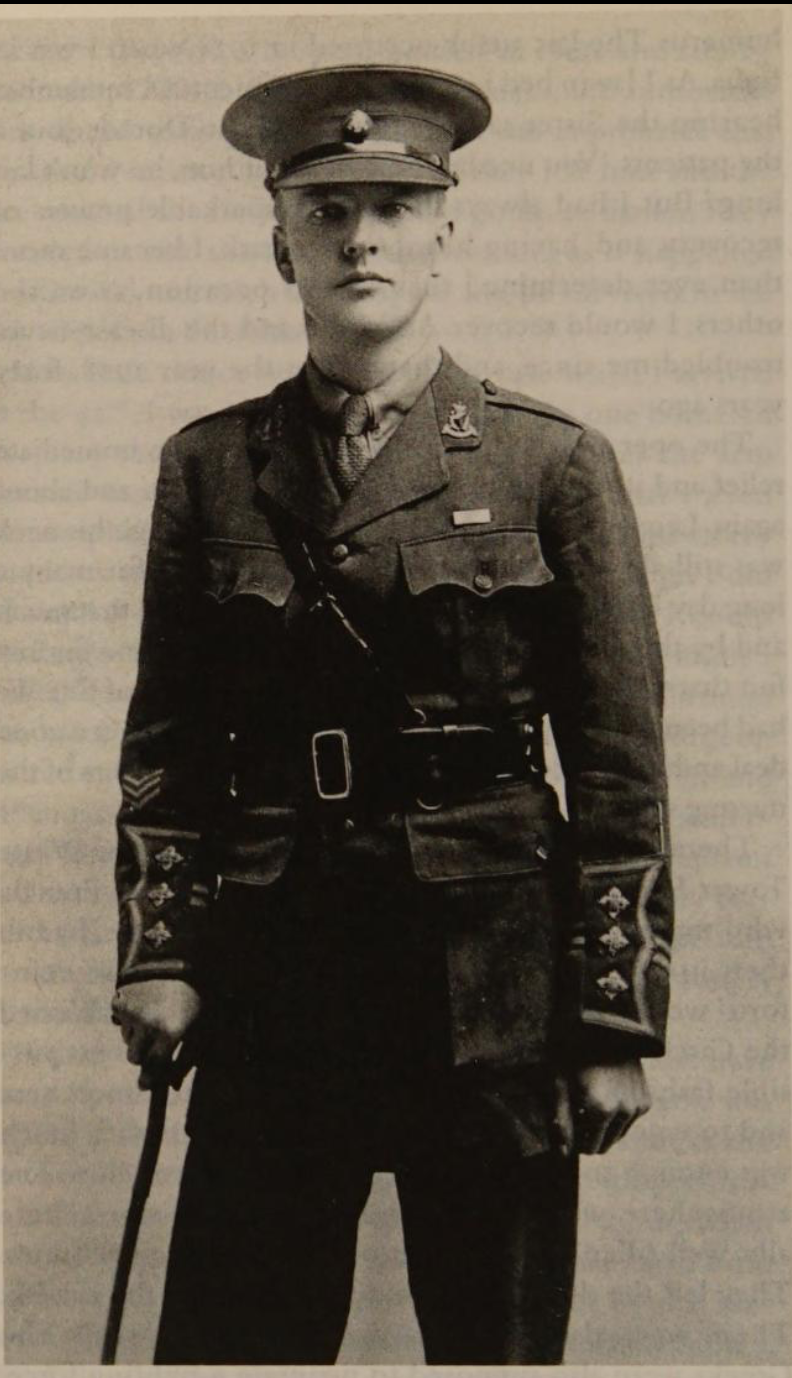
David Campbell, 1916, from Forward the Rifles
Salonika, Fighting the Bulgarians
After months of recuperation, Campbell returned to service, now as a captain, with his old battalion, which had been practically wiped out on Gallipoli before being reconstituted for service on the Salonika (now Thessaloniki, Greece) front, fighting the Bulgarians in the bleak, malaria-infested mountains of the lower Balkans in the summer and autumn of 1916. Campbell dwells at length on the reconstitution of his battalion and the camaraderie that developed among the field officers with whom he served.
Alas, it all came crashing down on October 29, 1916, when his battalion was launched in an assault against Bulgarian positions in a place called “Patrol Wood.” The attack succeeded, and Campbell was not wounded despite leading the first wave (for which he would receive the Military Cross), but his unit was devastated, thanks in part to the callous ineptitude of the general commanding his brigade. Most of Campbell’s friends were either killed or badly injured, many before his eyes. He testified to remembering all of them, and that day, in attending Armistice Day ceremonies every year after the war ended.
Campbell remained in service before being evacuated because of serious illness in the summer of 1917, thus missing, as he said with gratitude in hindsight, being thrown into the Western Front’s cauldron following the German offensive of March 1918. Completed just before Campbell’s death in 1971, Forward the Rifles apparently remained unpublished until this minor printing by Nonsuch Publishing, Dublin, in 2009. Undeservedly obscure, this is one of the better short memoirs of the Great War. My Goodreads rating: four out of five stars.