“All Distinctions Sunk in the Name of an American”: George Washington @ 250
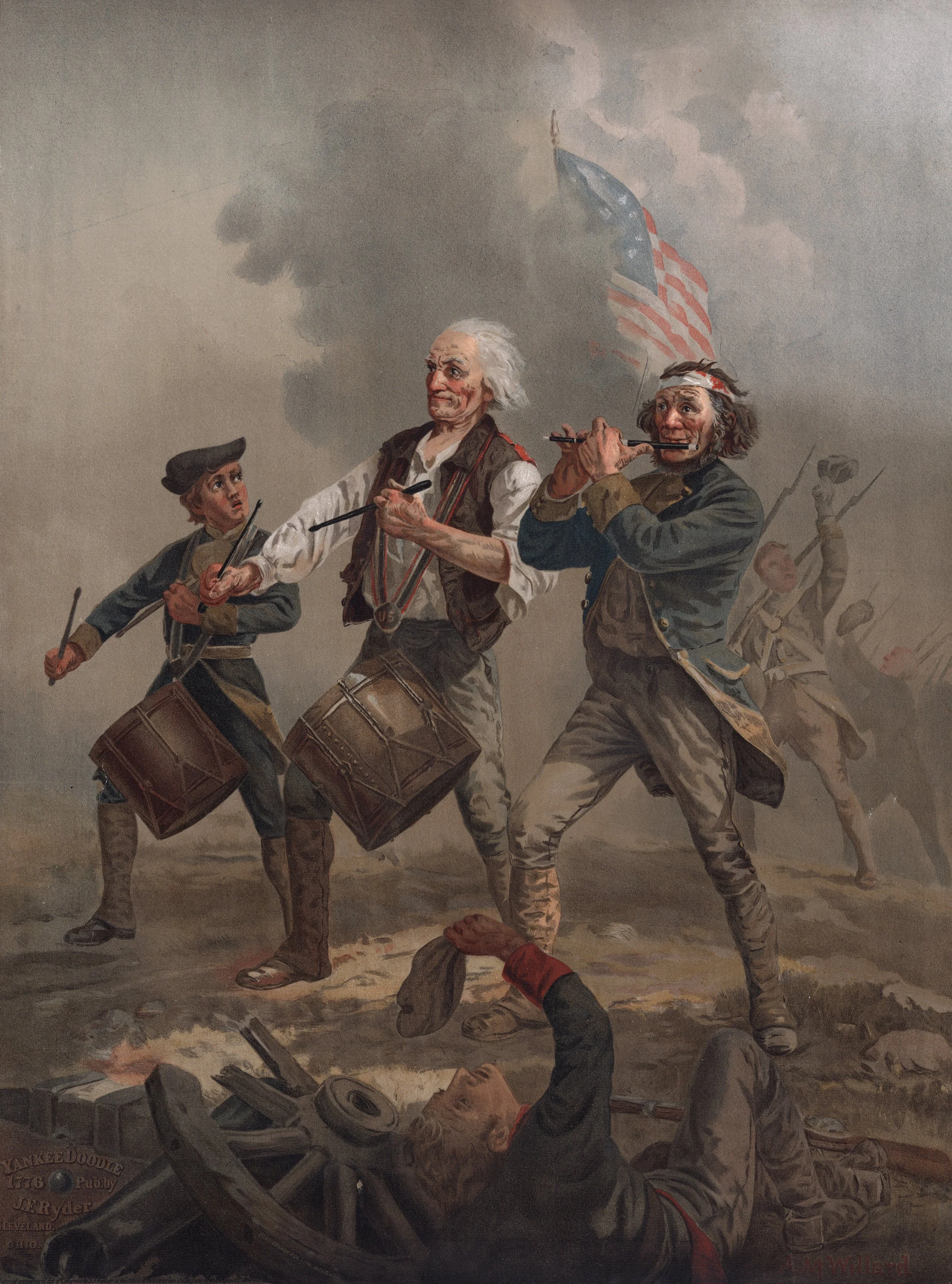
The Spirit of ‘76 by Archibald Willard (Wikimedia Commons)
In my twenty years editing and then directing the Washington Papers project, I acquired some facility for abandoning hindsight, and placing myself in the shoes of the individuals, including of course George Washington, writing and written about in the many thousands of papers included in his correspondence. These items are not just collections of data (which is why AI cannot remotely understand them), but expressions of fallible people with limited perspectives that did not include the ability to predict, for example, how the Revolutionary War would turn out. Human sympathy can elicit understanding of their perspectives, and of the innumerable human dramas being played out against war’s massive tapestry.
The final week of July, 1776, offers some insights into what life was like for the people who lived it—watching the British invasion fleet and force continuing to assemble on Staten Island and off New York and New Jersey, but having no way of knowing what would come next. Though many American soldiers were inspired by the Declaration of Independence and ready to fight, others were frankly terrified, as Brigadier General Nathanael Greene discovered when he interrogated four men captured as deserters and possible Tories.
As Greene wrote to Washington on July 27, he instead found them “to be a poor parcel of Ignorant Cowardly fellows. Two are Taylors named John & James Dunbar, and the other two are common labourers named Isaac Petit & Will Smith. They candidly confess they set off with an intention of going to Staten Island, but not with any intention of Joining the Enemy; but to get out of the way of fighting here. I believe the true reasons of their attempting to make their escape were, There has been a draft amongst the Militia to fill the New Levies, and it was rumoured these were a part that were drawn. It was also reported they were to go into the Northern Army [facing British incursions from Canada], and that almost all that went there dyed or were killed. The prospect was so shocking to them and to their Grand Mothers & Aunts. I believe they perswaded them to run away. Never did I see fellows more frighted, they wept like a parcel of Children and appear exceeding sorrowful.” Greene recommended them to Washington’s mercy, which they apparently received.
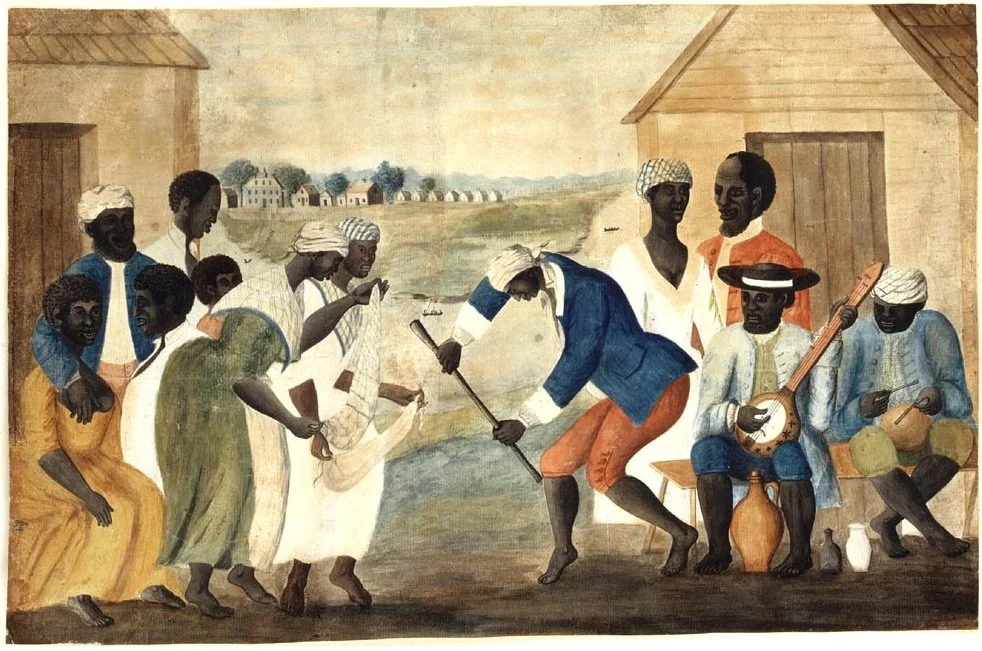
The Old Plantation, by John Rose (Abby Aldrich Rockefeller Art Museum)
Enslaved Men Speak
Much has been written recently, and rightly so, about the lives and experiences of Black slaves during the Revolutionary War. Their plight was in no way enviable, but always profoundly complicated, as revealed in a letter from Washington’s friend and fellow Virginian, Brigadier General Hugh Mercer, on July 31. Mercer had just interrogated two men, slaves who had escaped from British-occupied Staten Island. Mercer was only interested in any military intelligence the men could provide, but he learned more than that.
One of the men, named Joshua, told Mercer that “having gone to see the Fleet on Sunday last [three days earlier] his Master threaten’d him with a Beating; that at the Watering Place there is a large Encampment with many Soldiers, he has heard of no other large Encampment on the Island, except at the Post at Billop’s Point; he has overheard Discourses among the Enemy, of attacking New-York when Lord Howe’s Fleet shall arrive, before which time they should not have a sufficient Number of Men to pursue their Design with, that the Troops on the Island are almost all Irish & Scotch, that the English Regiments are to come over with Lord Howe’s Fleet, that said Fleet was to consist of two hundred Sail; that the Enemy have yet a Plenty of Provisions, this Examinant overheard an Officer threaten to come over to the Jerseys for Stock by & by: the Tories are well treated by the British Troops, Governor Tryon has set a Price on Provisions—The Soldiers are divided among the Plantations within his Knowledge on the East Side of the Island.” The other man, named Lawrence, said only that, a British “Officer with fourteen Soldiers lives at his Master’s House, He believes the greatest Number of Soldiers to be on the Shore near the Place where the Fleet lays.” What happened to the two men remains unknown.
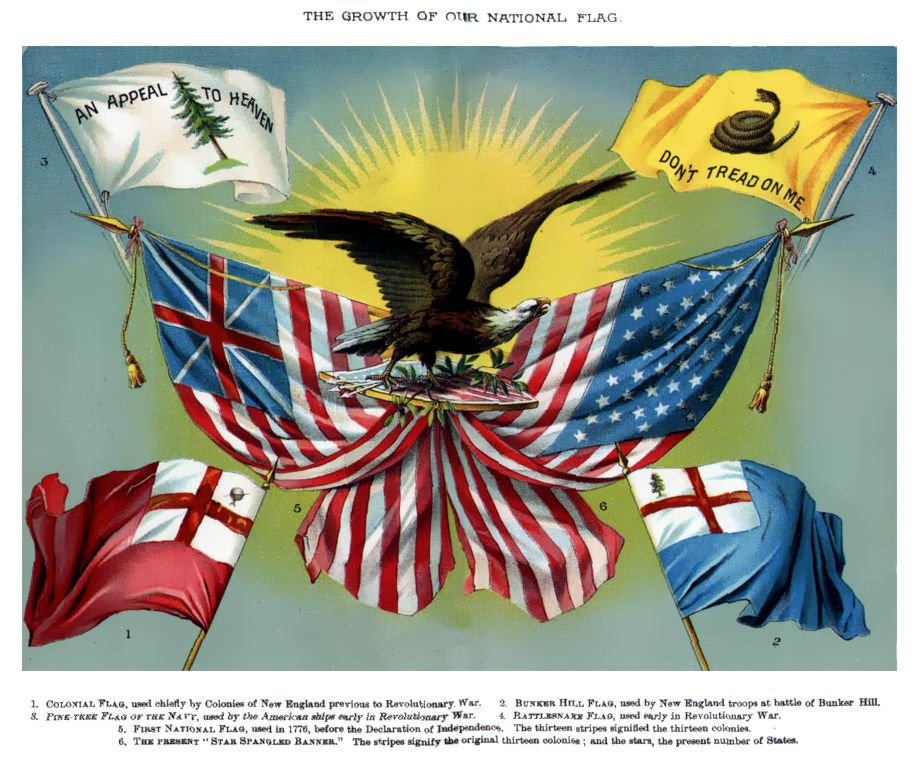
American Flags of the Revolutionary War (Wikimedia Commons)
Sectarianism and Regionalism
In General Orders on August 1, Washington pointed toward an extremely worrying trend in the Continental Army, inadequately appreciated today: that of sectarian and regional divisions among the troops. “It is with great concern,” Washington proclaimed, “that Jealousies &c: are arisen among the troops from the different Provinces, of reflections frequently thrown out, which can only tend to irritate each other, and injure the noble cause in which we are engaged, and which we ought to support with one hand and one heart. The General most earnestly entreats the officers, and soldiers, to consider the consequences; that they can no way assist our cruel enemies more effectually, than making division among ourselves; That the Honor and Success of the army, and the safety of our bleeding Country, depends upon harmony and good agreement with each other; That the Provinces are all United to oppose the common enemy, and all distinctions sunk in the name of an American; to make this honorable, and preserve the Liberty of our Country, ought to be our only emulation, and he will be the best Soldier, and the best Patriot, who contributes most to this glorious work, whatever his Station, or from whatever part of the Continent, he may come: Let all distinctions of Nations, Countries, and Provinces, therefore be lost in the generous contest, who shall behave with the most Courage against the enemy, and the most kindness and good humour to each other—If there are any officers, or soldiers, so lost to virtue and a love of their Country as to continue in such practices after this order; The General assures them, and is directed by Congress to declare, to the whole Army, that such persons shall be severely punished and dismissed the service with disgrace.”
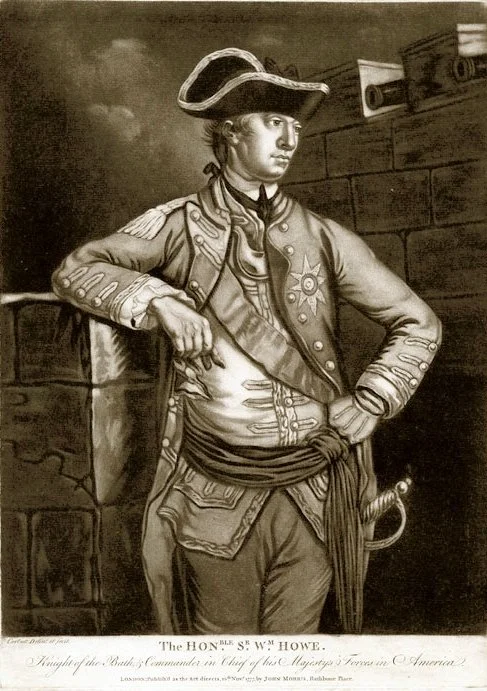
William Howe (Library of Congress)
Frenemies?
And finally, a minor but interesting note. British General William Howe, the man who would soon come to grips with Washington in the Battle of Long Island and on the long road to Trenton and Princeton, was well-known as a Whig, sympathetic with the American cause. He and Washington maintained a regular correspondence throughout the war, usually concerning prisoner exchanges, and it’s fascinating to watch their communications veer between the frigid and the almost cordial—including a well-known episode after the Battle of Brandywine on September 11, 1777, in which Washington returned Howe’s pet dog, lost on the battlefield.
On August 1, 1776, from Staten Island, Howe wrote to Washington about a routine matter, but closed it suggesting that he wished the two of them could have been friends under better circumstances: “I cannot close this Letter without expressing the deepest Concern that the unhappy State of the Colonies, so different from what I had the Honor of experiencing in the Course of the last War, deprives me of the Pleasure I should otherwise have had in a more personal Communication.” They never met, except on the field of battle.