War Artist Sir William Orpen, the Carnage of War, and the Treaty of Versailles: Great War Memoirs, Short Reviews
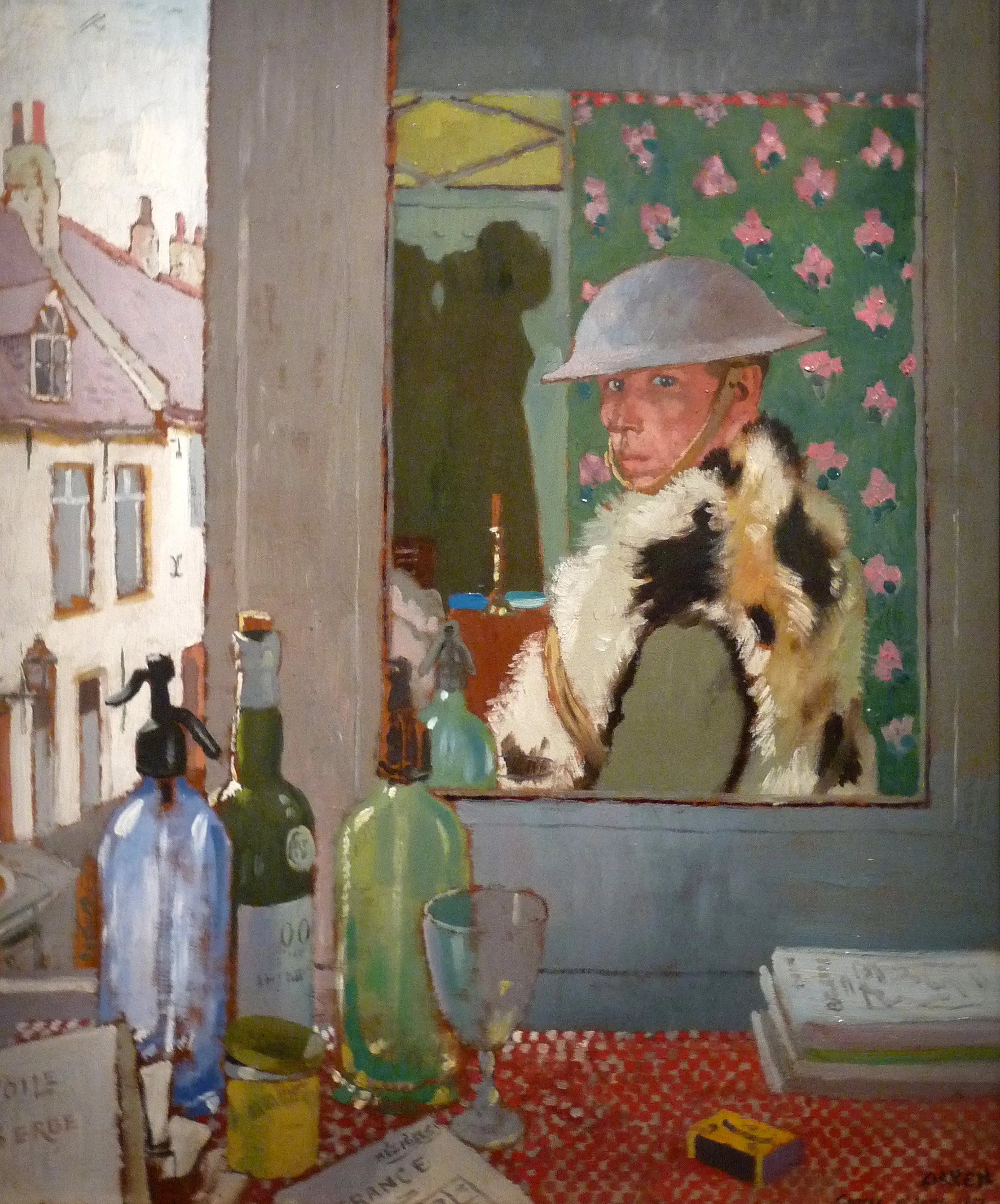
Ready to Start, 1917 (Imperial War Museums)
Reviewing An Onlooker in France, By Sir William Orpen (1921)
Most British students of the Great War are at least vaguely familiar with the works of Irish painter, Sir William Orpen (1878-1931). In my view, anyone seeking to understand the war’s cultural impact should study his works carefully. I once was fortunate enough to visit a display of Orpen’s works in Edinburgh, and I’m jealous of those who can see them in galleries more frequently. Still, they have been reproduced widely.
I’m not qualified to criticize art, so I won’t attempt to do so here; my purpose is to take a brief glance at his 1921 memoir, An Onlooker in France, written and published shortly after his attendance as an official artist at the Treaty of Versailles, serving as a capstone to his service in 1917-1918 near and behind the front. It’s a short work, just under 150 pages of text, but with numerous plates reproducing his paintings—mostly the less controversial ones with a few exceptions.
I’m sorry that I hadn’t read this memoir before now; it should be among the introductory works to understanding personal experiences of the First World War.

Dead Germans in a Trench, 1918 (Imperial War Museums)
The Horror of War
I wouldn’t place Orpen among the ranks of the “disillusioned” because he doesn’t seem to have been “illusioned” in the first place. He went to France in 1917 with the perception that he could paint whatever he wanted, anywhere he wanted, without official interference—and probably expecting to enjoy himself in the process. Although there do not appear to be any complete biographies of Orpen, he was by reputation a difficult character, beloved by those who understood him, but despised by many. His memoir rather savagely dismantles military “red tabs” who sought to interfere with his work; and he ruthlessly employed his high-ranking connections, including with Field Marshal Douglas Haig, to squash his adversaries.
Orpen did seek the front lines, to a degree, although he preferred to peruse the aftermath of battle on the Somme and Ypres battlefields. He was equally repulsed and fascinated by the carnage he witnessed, and this is reflected in several of his paintings. I would like to say that Orpen felt a deep empathy with the average Tommy, but he appears to have done so largely in the abstract—he admired their sacrifice, but it’s also clear, from his writing and his painting, that he considered them vaguely unsavory. If anything, he admired the French more; although his contempt for “The Hun” is palpable.
Orpen’s true rapport seems to have been with staff and senior officers (at least, those who did not oppose him), and with the “knights of the air”—he painted a number of memorable portraits of British airmen, and was close friends with Maurice Baring, author of a fine memoir, R.F.C. H.Q., 1914-1918.
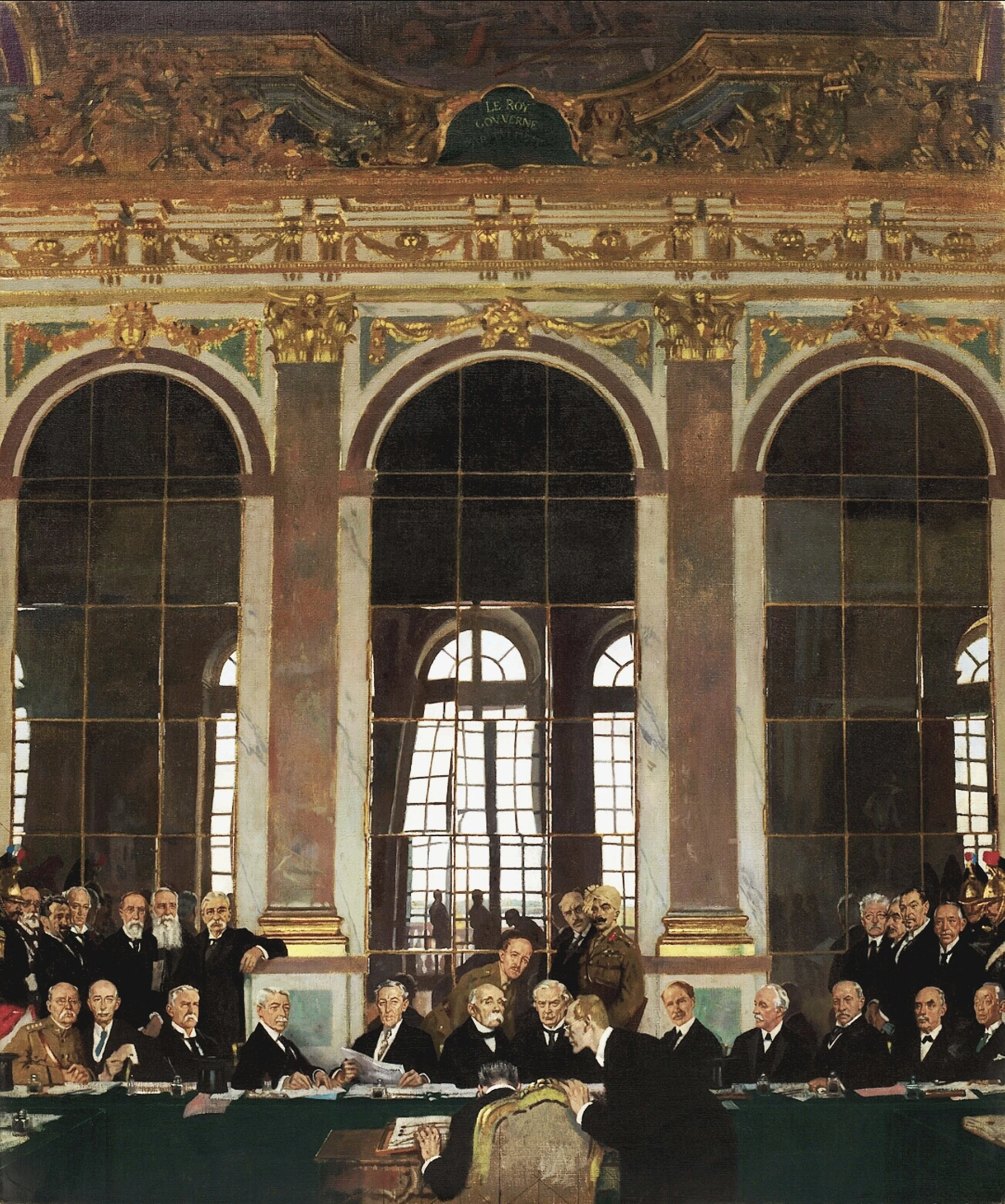
The Signing of Peace in the Hall of Mirrors, 1919 (Imperial War Museums)
The Frock Coats at Versailles
Orpen became extremely ill with blood poisoning during the war, and was still suffering from it when called to attend the deliberations and signing of the Treaty of Versailles in 1919. By that time he had become cynically embittered with the “frock coats”—diplomats and statesmen—who in his view claimed all the glory despite having done none of the fighting. It’s important to point out, though, that he expressed offense not on behalf of the average soldiers—Orpen was no Blunden, Owen, or Sassoon—but of generals like Haig and Foch whom he believed were unfairly ignored.
Orpen’s memoir unfortunately sheds no light on his (in)famous painting, To the Unknown British Soldier in France—initially a darkly satirical piece that he altered after the initial version revolted the directors of the Imperial War Museum, which had commissioned it. He does, however, present interesting word portraits of individuals he met and painted there, including President Woodrow Wilson and Field Marshal Ferdinand Foch.
As a beautifully written insight into an artist’s view of the war—even if his view was stilted and imperfect—I gave this one a Goodreads rating of four out of five stars.