France’s century-long wars of conquest in Algeria, Morocco, and Tunisia remain both understudied and symbolic of European imperialism. Launching overseas wars of conquest in search of political legitimacy at home, and then fostering colonial settlement, France initiated over a century of conflict. Successful on the battlefield after tremendous effort, these wars of empire ironically ended by generating nationalist sentiments that undermined French imperial aspirations.
The controversy both at the time and today about France’s North African ambitions has overshadowed the significant history of this conflict. Fought across one of the world’s most unforgiving, yet spectacular, terrain, these wars featured innovative military campaigns, epic battles, inspiring resistance leaders, and countless episodes of remarkable courage. Profoundly relevant, the French North African wars had a major global impact, influencing the development of military organization, tactics, and technology in the American Civil War, both World Wars, and even modern Middle Eastern conflicts. Yet it is the human element that is most compelling. Based on extensive primary source research, Lions of the Atlas: France’s Wars for Empire and Resistance in North Africa, 1827–1934 is the first-ever comprehensive study, in any language, of these important and pivotal wars and those who fought them.
Beginning with the French naval blockade and amphibious invasion of Algeria in 1827-1830, the book tells the story of the large-scale campaigns and huge set-piece battles that ensued over the following several decades, across the highest peaks of the Atlas Mountains, in hills and valleys, along and over rivers, through scorching deserts, and even in fierce urban combat in town and city streets. Engagements include two unforgettable campaigns to capture the mountain fortress at Constantine, bold and devastating forays by Algerian cavalrymen and mountain warriors, and the pivotal 1844 Battle of Isly. The story continues with the French invasion of Tunisia in 1881, and then the thirty-year French campaign for the subjugation of Morocco, concluding with the Rif War of the 1920s that shocked the world. The narrative features charismatic resistance leaders such as Algeria’s Emir Abd-el-Kader, legendary military units such as the colorful Zouaves and the Foreign Legion, and changes in military technology, including the use of aircraft and armored vehicles. A major contribution to our understanding of one of the world’s most storied regions, Lions of the Atlas provides gripping and insightful reading while presenting the complex story of war and resistance in North Africa.
Westholme Publishing, 2026
France’s century-long wars of conquest in Algeria, Morocco, and Tunisia remain both understudied and symbolic of European imperialism. Launching overseas wars of conquest in search of political legitimacy at home, and then fostering colonial settlement, France initiated over a century of conflict. Successful on the battlefield after tremendous effort, these wars of empire ironically ended by generating nationalist sentiments that undermined French imperial aspirations.
The controversy both at the time and today about France’s North African ambitions has overshadowed the significant history of this conflict. Fought across one of the world’s most unforgiving, yet spectacular, terrain, these wars featured innovative military campaigns, epic battles, inspiring resistance leaders, and countless episodes of remarkable courage. Profoundly relevant, the French North African wars had a major global impact, influencing the development of military organization, tactics, and technology in the American Civil War, both World Wars, and even modern Middle Eastern conflicts. Yet it is the human element that is most compelling. Based on extensive primary source research, Lions of the Atlas: France’s Wars for Empire and Resistance in North Africa, 1827–1934 is the first-ever comprehensive study, in any language, of these important and pivotal wars and those who fought them.
Beginning with the French naval blockade and amphibious invasion of Algeria in 1827-1830, the book tells the story of the large-scale campaigns and huge set-piece battles that ensued over the following several decades, across the highest peaks of the Atlas Mountains, in hills and valleys, along and over rivers, through scorching deserts, and even in fierce urban combat in town and city streets. Engagements include two unforgettable campaigns to capture the mountain fortress at Constantine, bold and devastating forays by Algerian cavalrymen and mountain warriors, and the pivotal 1844 Battle of Isly. The story continues with the French invasion of Tunisia in 1881, and then the thirty-year French campaign for the subjugation of Morocco, concluding with the Rif War of the 1920s that shocked the world. The narrative features charismatic resistance leaders such as Algeria’s Emir Abd-el-Kader, legendary military units such as the colorful Zouaves and the Foreign Legion, and changes in military technology, including the use of aircraft and armored vehicles. A major contribution to our understanding of one of the world’s most storied regions, Lions of the Atlas provides gripping and insightful reading while presenting the complex story of war and resistance in North Africa.
Westholme Publishing, 2026
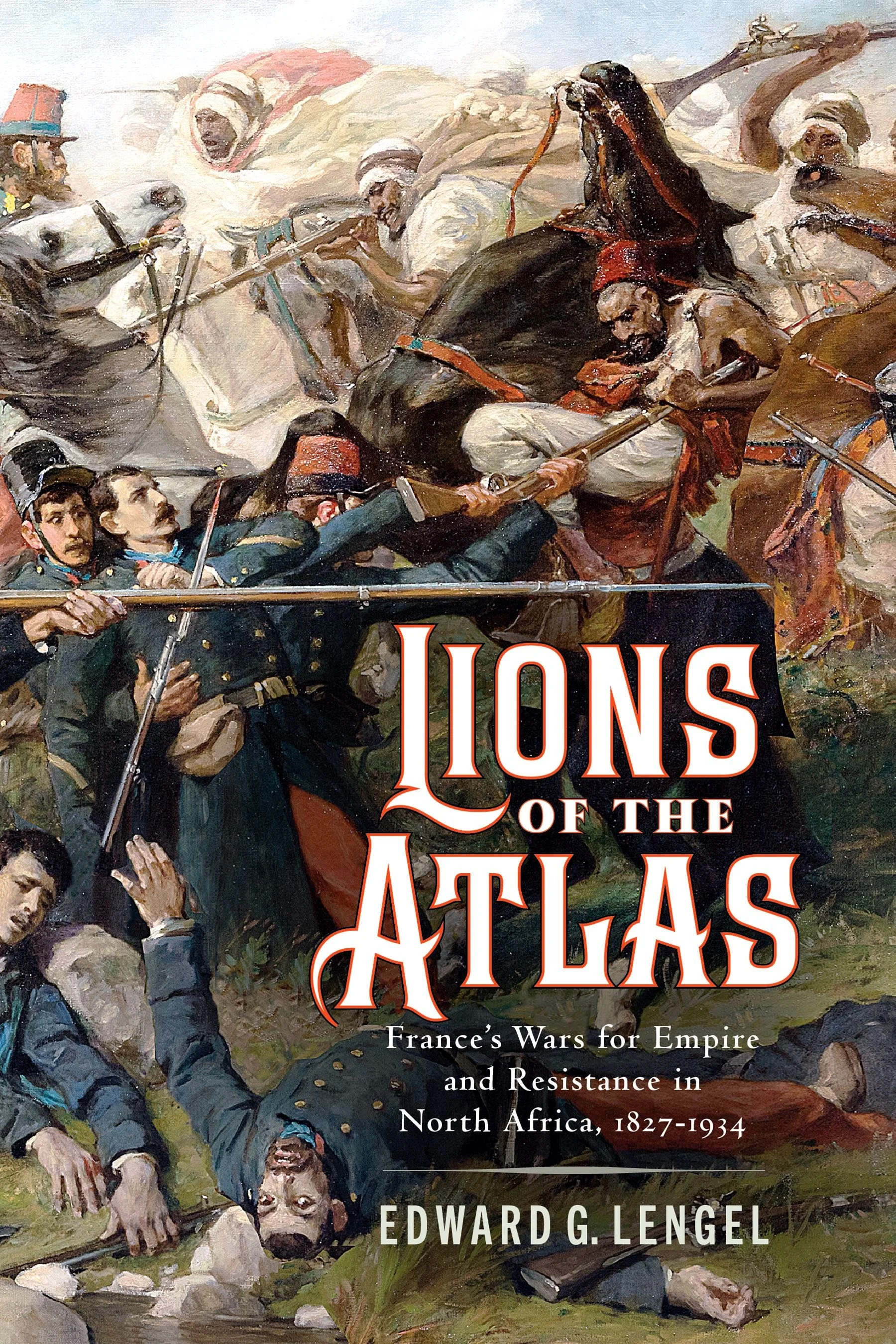 Image 1 of 1