A “Horrid Plot,” or a Forgery? The Alleged Plot to Assassinate Washington on the Eve of British Invasion: George Washington @ 250
Washington on His Deathbed (1851); Dayton Art Institute/Wikimedia Commons
Two hundred and fifty years ago, on June 25, 1776, the Continental Army’s Commander in Chief, George Washington, wrote to Lieutenant Colonel Benjamin Tupper, ordering him to keep a close eye on the Narrows, between Staten Island and Long Island, from the upper to the lower bays of New York City. Washington understood that some boats, piloted by evildoers, had recently passed the Narrows, evading American whale boats patrolling the passage. “Keep the strictest look out,” Washington told Tupper, “as there is no doubt our Inveterate Enemies who have had a hand in the late horrid Plot will try every method in their power to escape from the hands of Justice.”
To what “horrid Plot” did the Commander-in-Chief allude? It amounted, apparently, to a betrayal of the blackest dye.
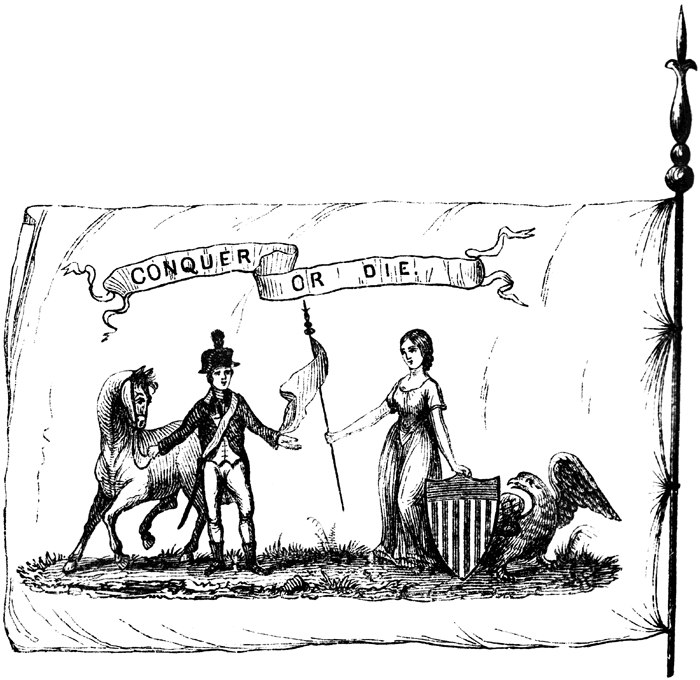
Banner of Washington’s Life Guards (Lossing, Pictorial Field Book of the Revolution, Wikimedia Commons).
Scoundrels Among the Elite Guards
George Washington’s Life Guards, established in March 1776, were supposed to be men of the highest moral and physical standards. Early on, however, candidates apparently were not subjected to strict screening. On June 15, two members of the Guards, Thomas Hickey and Michael Lynch, were hauled in front of New York’s provincial congress and accused of counterfeiting. Nathaniel Woodhull, the congress’s president, decided that the two soldiers were not subject to civil courts, but must be court-martialed instead; and so he let Washington know that he was going to send them on to his custody.
Hickey and Lynch weren’t the cleverest villains, however, and they made their predicament worse by bragging to some of their fellow prisoners that counterfeiting had only formed part of a wider conspiracy, aimed at soliciting desertion and betrayals from the Continental Army, and undermining New York City’s defenses in anticipation of an imminent British invasion. Further investigation by John Jay and others determined that Hickey had received two shillings to enlist in a loyalist force, but that he did indeed seem to form part of a wider conspiracy. Even so, Lynch was not tried; and although several civilians were caught as being apparent co-conspirators, and some jailed briefly, none of them were ever formally condemned or executed. Only Hickey was sent on to New York for court martial and sentence.
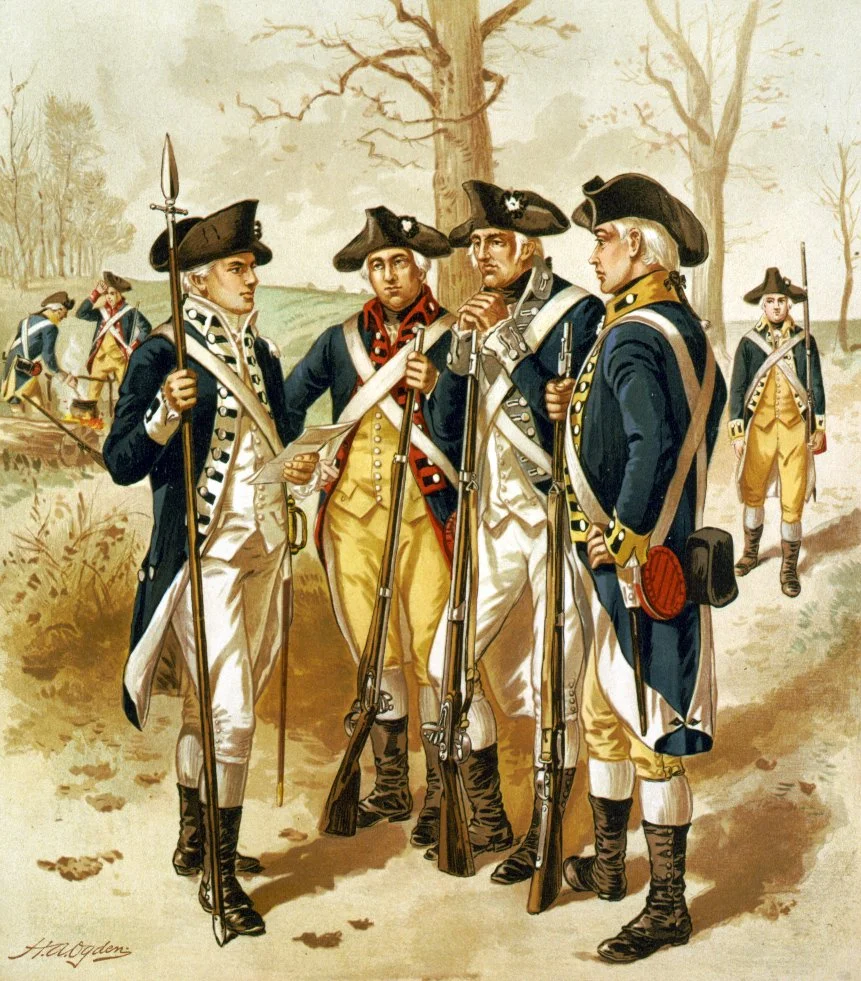
Continental Army Infantry (Library of Congress)
Trial and Conviction . . . For What?
Hickey’s court-martial took place in New York City on June 26. In the proceedings, a fellow prisoner of the New York provincial congress testified that, while incarcerated, “in different Conversations [Hickey] informed me that the Army was become damnably corrupted. That the [British] Fleet was soon expected, & that he & a Number of others were in a Choir to turn against the American Army when the King’s Troops should arrive, & ask’d me to be one of them. The Plan he told me was, some were to be sick, & others were to hire Men in their Room.”
Shockingly, Hickey allegedly claimed that eight Life Guards were involved in the plot, along with several civilians; but the only soldier that Hickey mentioned by name, William Green, testified as a hostile witness against Hickey. For his part, Hickey claimed that “he engaged in the Scheme at first for the Sake of cheating the Tories & getting some Money from them; & afterwards consented to have his Name sent on Board the Man of War, in order that if the Enemy should arrive & defeat the Army here, & he should be taken Prisoner, he might be safe.”
General Orders on June 27 proclaimed that, “Thomas Hickey belonging to the Generals Guard having been convicted by a General Court Martial . . . of the crimes of “Sedition and mutiny, and also of holding a treach’rous correspondence with the enemy, for the most horrid and detestable purposes,” is sentenced to suffer death. The General approves the sentence, and orders that he be hanged to morrow at Eleven oClock.
Hickey was doomed. But why?
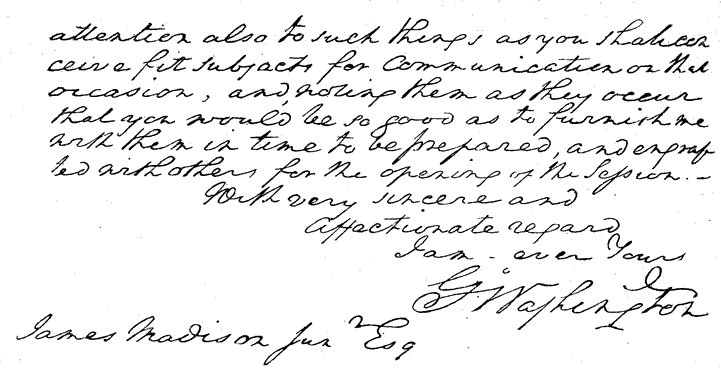
Excerpt of a letter from Washington to James Madison (Wikimedia Commons).
Conspiracy, Forgery, or Folk Legend?
Rumors have often swirled that Hickey was only part of a wider plot, apparently hatched by former royal governor William Tryon, to abduct and potentially assassinate Washington himself. Bestselling author Brad Meltzer (who I personally know and like) argued in his recent book The First Conspiracy that the plot did indeed exist. As Meltzer told Smithsonian magazine: “The assassination plot is hidden history. When the British were coming, the last thing Washington wanted to say was, ‘Hey, everyone, my own men just turned on me.’ That is not the picture of leadership you want when you are in charge of the military. It’s clear to me that he didn’t want anyone to know this story.”
The Fraunces Tavern Museum in New York City seems to back up this idea in an article on the “Summer of 1776” on its website, stating: “We know Washington was made aware of the conspiracy by Monday, June 24th. In a letter to Martha discussing the matter, he wrote, ‘my attention in this moment called off to the discovery . . . of a plot. It is impossible, as yet to developed [sic] the mystery in which it either is, or is supposed to be involved. For my part, I who am said to be the object principally aimed at in it, find myself perfectly at my ease.’ It is unclear if Washington truly felt at ease, or was just trying to ease Martha.”
Wow. Follow the footnote, and you’ll see it cites to volume 4, page 106 of Worthington Chauncey Ford’s 19th century edition of the Writings of Washington. The page 106 is erroneous, but you’ll find it on page 179. What a great letter . . . read on, and you’ll find George telling Martha, “I love my king; you know I do: a soldier, a good man, cannot but love him.”
Wait, what?
Go back a few pages, and you’ll see Ford labels, in large letters, that this alleged epistle to Martha is a FORGERY. It has been known since the 18th century, in fact, to have been a wartime forgery, one of several apparently written as part of another loyalist plot to defame Washington, and then resurrected in the 1790s by President Washington’s political opponents (including friends of Thomas Jefferson).
The editors of the modern Washington Papers, wisely cautious (as at least they were while I was there!), said nothing of the alleged plot to kill Washington; and I have never seen compelling existence that it ever existed. Whether or not it did, Hickey still met his maker on the morning of June 28, 1776. As reported by the city’s Constitutional Gazette: “Yesterday forenoon was executed in a field between the Colonels McDougall and Huntington’s camp, near the Bowry-Lane, (in the presence of near 20,000 spectators) a soldier belonging to his Excellency General Washington’s guards, for mutiny and conspiracy; being one of those, who formed, and was soon to be put in execution, that horrid plot of assassinating the Staff Officers, blowing up the magazines, and securing the passes of the town on the arrival of the hungry ministerial myrmidons: It’s hoped the remainder of those miscreants, (now in our possession,) will meet with a punishment adequate to their crimes.”
In General Orders that same day, Washington proclaimed: “The unhappy Fate of Thomas Hickey, executed this day for Mutiny, Sedetion and Treachery; the General hopes will be a warning to every Soldier, in the Army, to avoid those crimes, and all others, so disgraceful to the character of a Soldier, and pernicious to his country, whose pay he receives and Bread he eats—And in order to avoid those Crimes the most certain method is to keep out of the temptation of them, and particularly to avoid lewd Women, who, by the dying Confession of this poor Criminal, first led him into practices which ended in an untimely and ignominious Death.”
Later that day, Washington received word of the arrival of the British invasion fleet.