An Australian Tourist in War’s Backwash: Egypt, Palestine, Syria, Lebanon, 1918. Great War Memoirs, Short Reviews
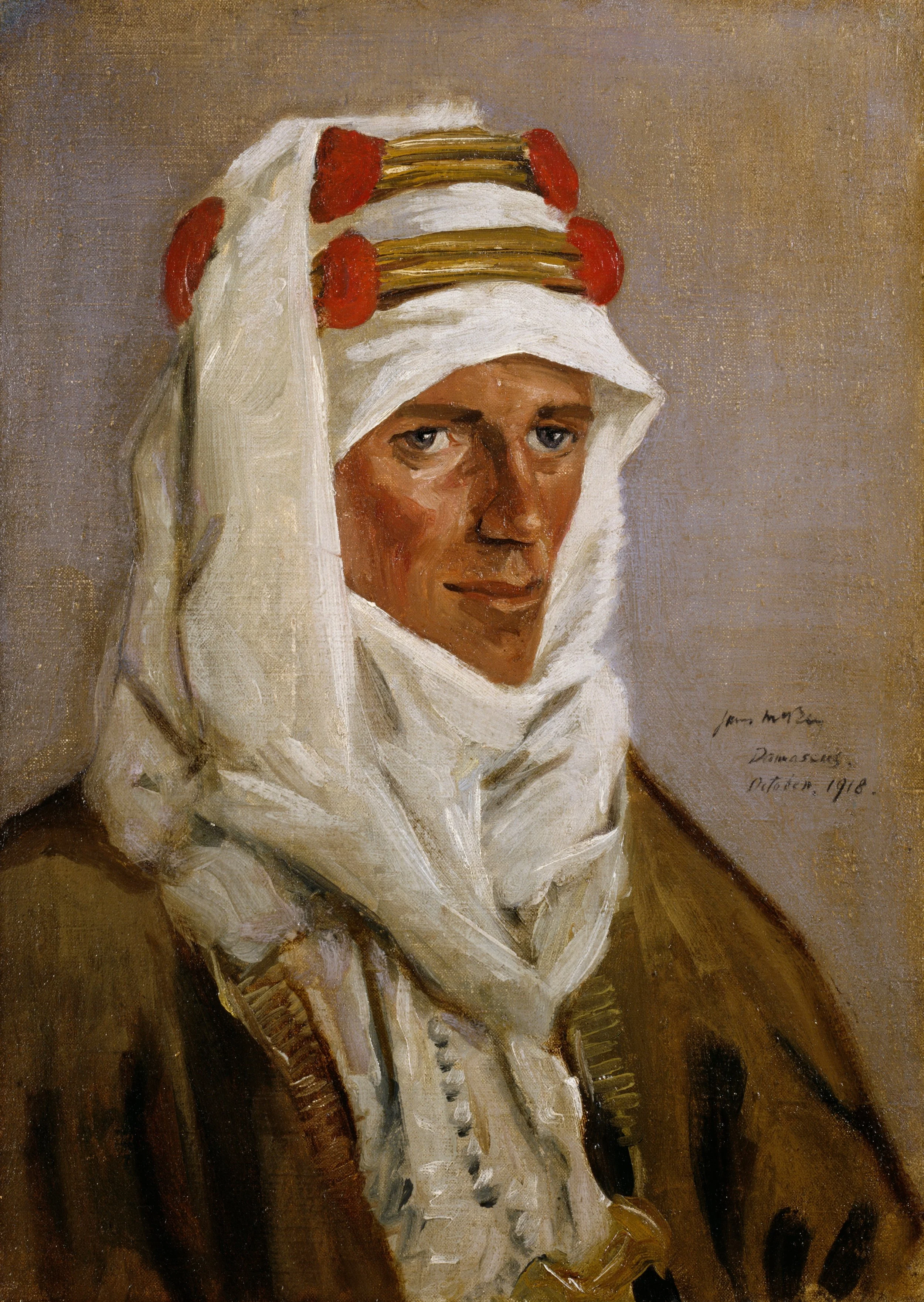
T.E. Lawrence, Damascus, October 1918, by James McBey (Imperial War Museums)
A Review of Nile to Aleppo: With the Light-horse in the Middle-East, by Hector William Dinning (1920)
Battlefield tourism continues to attract thousands of history enthusiasts and tourists every year. For World War I, this typically involves visits to the Western Front in France and Belgium, with more venturesome travelers exploring sites in the Tyrol or—very rarely—the Balkans or Poland. Australians and New Zealanders, along with British, French, and curious Americans, might also visit or go on a kind of military history pilgrimage to Gallipoli.
Imagine, though, touring the Middle East in the final months and immediate aftermath of World War I, visiting places now well off-limits—a status likely to persist for many generations—to even the most adventuresome explorers, in Gaza, Israel/Palestine, Syria, and Lebanon.
Such was the route traversed by Hector William Dinning (1887-1941), officially a captain in the Australian Army Service Corps, but also working as a journalist and as a historian with the War Records Section, writing the official history of Australian troops in World War I. In Nile to Aleppo—a followup to his wartime memoir, Byways on Service—Dinning compiled a thoughtful, deeply observant travelogue of his journey in the autumn and early winter of 1918 from Taranto, Italy, through Egypt to Palestine, Syria, and finally Lebanon, following the advances of the Australian Light Horse and other Allied troops against the shattered remnants of retreating Ottoman Army.
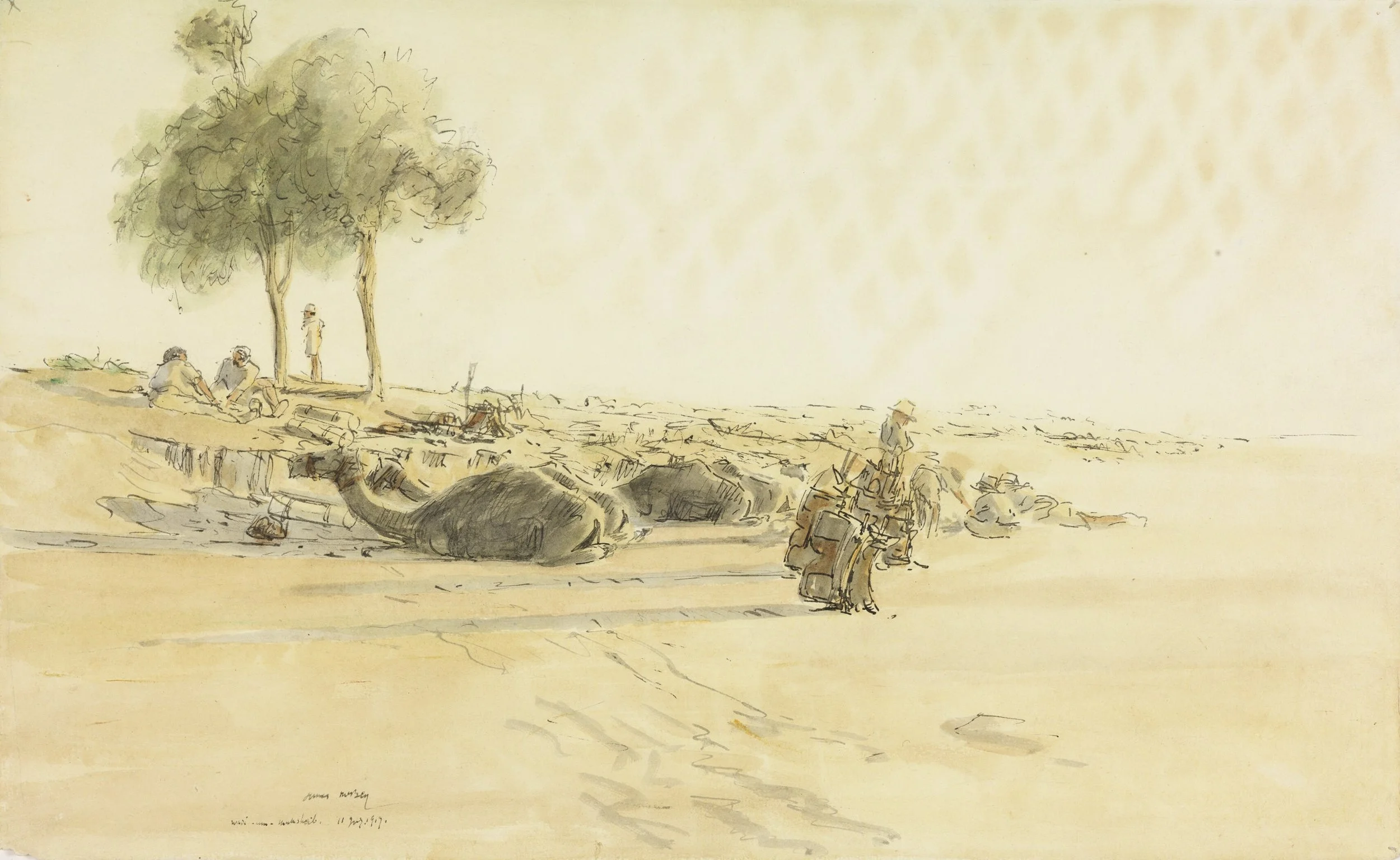
The Long Patrol—The Wadi (1917) by James McBey (Imperial War Museums)
In Lawrence’s Footsteps
Though writing in testament to the Australian Light Horsemen, whom he deeply admired, Dinning actually has little to say about them in Nile to Aleppo. His view was more toward civilians and others he met along the route, struggling in one way or another to cope with the profoundly dislocating aftermath of the war just winding down.
Dinning writes movingly, for example, of the abject poverty he encountered in Taranto and rural Italy; nationalist ferment and brutal suppression in Egypt; bleak underdevelopment and burgeoning ethnic hatreds in Palestine; and the beauties of Damascus and Beyrouth (Beirut), co-existing with poverty, famine (with some harrowing depictions of starving children), and cruelty. He has a fine eye for natural features, architecture, and history, and a complex mixture of fascination, empathy, and contempt for the people and cultures he encountered.
Dinning had an especial interest in the war’s detritus—and its human backwash—including Turkish columns under aerial attack in September 1918; corpses of soldiers, animals, and shattered equipment left behind; hospitals overflowing with wounded and, more frequently, victims of cholera, influenza and other diseases; emaciated Allied prisoners from the disastrous 1915-1916 Kut expedition trying to find their way home; and Australian infantry, cavalry, and airmen sick of the war, getting in trouble with British authorities, and eager to get home. He also writes colorfully of individual characters he met, most interestingly Karl, his German driver managing a decrepit Mercedes touring car, who was trying desperately to avoid incarceration and forced repatriation to Germany.
Dinning encountered T.E. Lawrence, and writes about him, and the tales he heard of some of his less-reputable exploits, without much apparent admiration. More interesting, if not dwelt upon with the detail that might have been hoped, is Dinning’s relationship with Scottish artist James McBey, who accompanied his expedition and also painted Lawrence’s portrait. That portrait, and some of McBey’s other semi-abstract portrayals of scenes along their route, add considerably to this book’s attraction. My Goodreads rating: three out of five stars.