Campaign’s First Shots, An Assassination Plot: George Washington @ 250

Washington Assumes Command of the Continental Army, 1775 (public domain image)
With the arrival of June 1776, clearer skies and calmer seas, George Washington knew that the campaigning season was well upon him. The British invasion fleet might turn up at any moment; likely near New York City, where he had stationed the bulk of his Continental Army, but the commander in chief had no way of knowing for certain. All he could do was wait, fuss over military supplies and organization, while the Continental Congress kept itself busy with things like creating a new Board of War for military oversight.
Among the first of several hints of something amiss came on June 15 when, as General William Heath wrote, some mysterious boats moved slowly past Governor’s Island below New York City in the darkness. Dozens of American sentries on shore detected the movement and opened fire with their muskets; but the boats’ crews returned fire, shouted “be Damn’d,” and, when out of musket range, taunted the American sentries with derisive huzzahs.
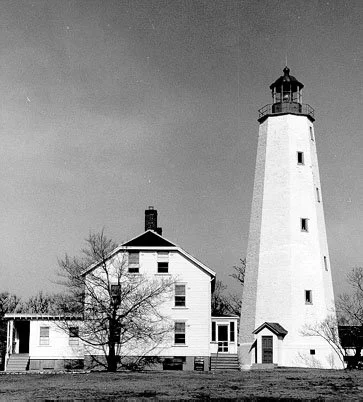
Sandy Hook Light House, 1764 (Coast Guard)
Battle at the Sandy Hook Light House
Meanwhile, affairs were hotting up at Sandy Hook, New Jersey, a critical coastal navigation point, where a light house had long stood. Understanding that the British might capture the light house and use it to guide their own ships toward New York, American militia had partially dismantled it in March 1776. After skirmishing between militia and British shore parties took place near there, however, a small British naval squadron that had been hovering offshore landed detachments to occupy the place at the end of April.
Washington decided that this could not stand. In General Orders on June 17, he ordered the assembly of a detachment of two hundred men to assemble and march to Monmouth County. There they were placed under the command of Lt. Col. Benjamin Tupper, who assaulted the light house on June 21. It was a fiasco, but fortunately a bloodless one.
Later that day, Tupper wrote to Washington about what had happened: “this morning at 4 oclock . . . I advanced within a 150 yds of the Light house in So Secret a manner that my party were not Discovered, I advanced with an officer & desired to Speak with the Commanding Officer and after a few words he fired Several Shot at me but as God would have it he mist me I returnd to my party and ordered the Artillery to play which Continued an hour, but found the walls So firm I could make no Impression.” Tupper made some demonstrations against the British to let them “know we are ready to meet them in the field or bush,” but to no effect.
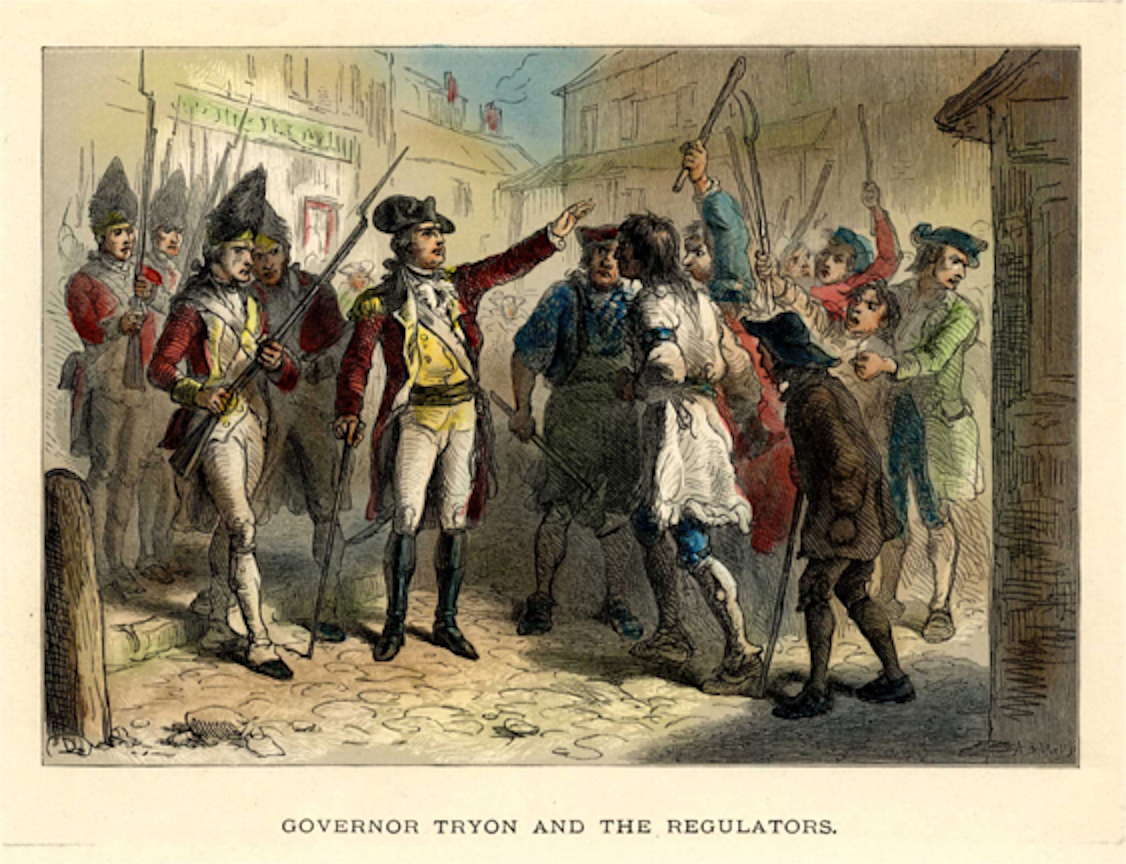
William Tryon Confronts the Regulators, 1771 (University of North Carolina Library)
A Sinister Plot
Even as the “battle” for the light house fizzled, Washington received worrisome news. John Jay, a New York patriot who would become Washington’s lifelong ally, and an outstanding diplomat and chief justice, had just begun unraveling a conspiracy allegedly headed by New York’s royal governor and New York City’s royal mayor, William Tryon and David Matthews, to infiltrate the city as soon as the British arrived, sow disaffection . . .
. . . and assassinate George Washington, at the hands of two of his own trusted Life Guards.
The week ahead would raise the curtain on this supposed plot . . . and on the British invasion.