Gommecourt, July 1, 1916, Battle of the Somme: A Subaltern’s Memories; Great War Memoirs, Short Reviews
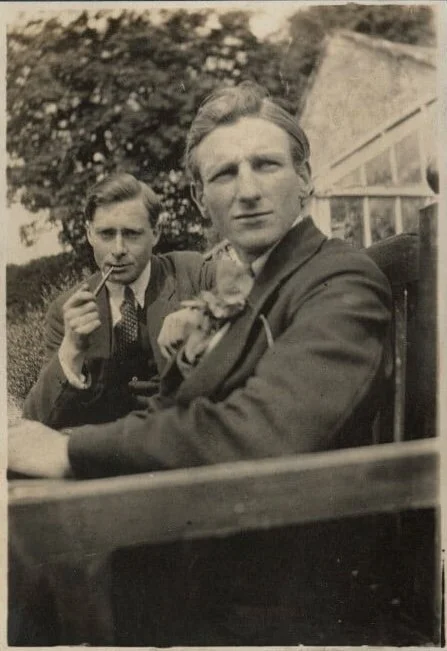
Edward George Downing Liveing (background) with Edmund Blunden (National Portrait Gallery, London).
Review of Attack: An Infantry Subaltern’s Impression of July 1, 1916
In commemoration of the 110th anniversary of the first day of the Battle of the Somme, July 1, 1916, I’ve decided to read some memoirs chronicling this epic and tragic struggle. First off was this short, 114-page memoir by Edward George Downing Liveing: Attack: An Infantry Subaltern’s Impression of July 1, 1916. Originally published in Blackwood’s Magazine in December, 1917, it appeared as a book in the spring of 1918.
Living (1895-1963), who attended St. John’s College, Oxford, and has been called a “historian” although I’m not aware of his work in the field, would make a career as a regional director of the B.B.C. During World War I he served as a second lieutenant with the 12th London Regiment, serving in France, Egypt, and Palestine.
Attack is a fascinating little book. I almost always avoid war memoirs published during the war, which were subject to the censor’s knife and the influence of propaganda, but I’m glad I made an exception in this case.
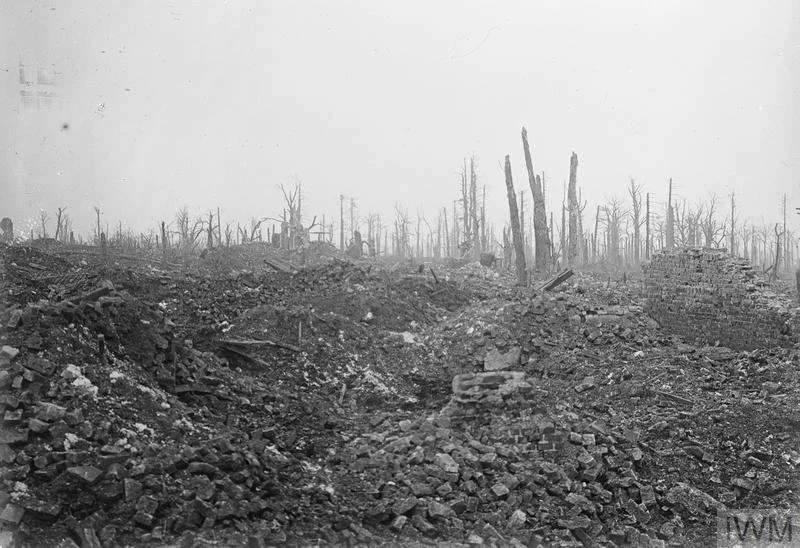
The ruins of Gommecourt, March 1917 (Imperial War Museums).
Gommecourt, First Day of the Somme
As John Masefield’s introduction explains, Liveing’s battalion of the 12th London Regiment went in on July 1, 1916, to attack the southern face of the formidable German redoubt at Gommecourt. Although the British penetrated to the third German trench line here, they were eventually ejected (the attack on the north face went nowhere) with horrendous casualties.
Liveing’s chronicle is plain, straightforward, and completely honest, depicting the few days building up to the attack; his own meditations on life, death, and religion as he prepared to make the assault; the course of the fighting; and his wounding in the hip and harrowing return through the lines.
Surprisingly for a book published in wartime, Liveing bluntly depicts the experience of attack (likening the collective sound of German machine gun bullets to the hiss of a steam engine); the dispersion of the infantry, and the incredible casualties they suffered. Remarkably, he distills the battle’s visuals to white (smoke); red (blood); green (grass); and blue (sky; it was a gorgeous day). The author himself had barely reached the first German trenches when he was hit in the hip and, not making any show of heroics, crawled back through No Man’s Land to his own lines. Attack also is quite open about the agonies of physical wounds he witnessed, and also about the effects of shell-shock, which he describes in a number of individual cases; again, surprising for a wartime publication.
After the war, as the photo heading this review suggests, Liveing became friends with Edmund Blunden, author of the magnificent memoir, Undertones of War. It’s a shame that Liveing, apparently, never put pen to paper for a full memoir of his own; perhaps he thought July 1, 1916, said all that needed to be said. My Goodreads rating: five out of five stars.