George Washington @ 250: Open Fire!

Artillery Piece at Yorktown Battlefield (Wikimedia Commons)
The Bombardment Begins
The American bombardment of Boston began late in the evening on March 2, 1776. Two hundred and fifty years later, the anniversary of that event was remembered and commemorated with pride. At the time, though, it was anticlimactic, even embarrassing.
Dorchester Heights not yet being occupied, the guns opened fire from Lechmere Point and Lamb’s Dam—just close enough to score some hits on the British-occupied city if the pieces were handled well. But they weren’t. Moments after the bombardment began, four heavy mortars exploded upon firing, sending red hot shards flying in all directions. The gunners had either packed them too much with precious powder that Washington had so carefully hoarded, or erred in placing the pieces directly on the icy ground without bedding to cushion them.
Nor did the weapons that managed to fire over the next two days hit anything. And the British replied contemptuously with far more accurate artillery fire on the American guns, killing and injuring several artillerymen.
George Washington’s first shot had been a damp squib.
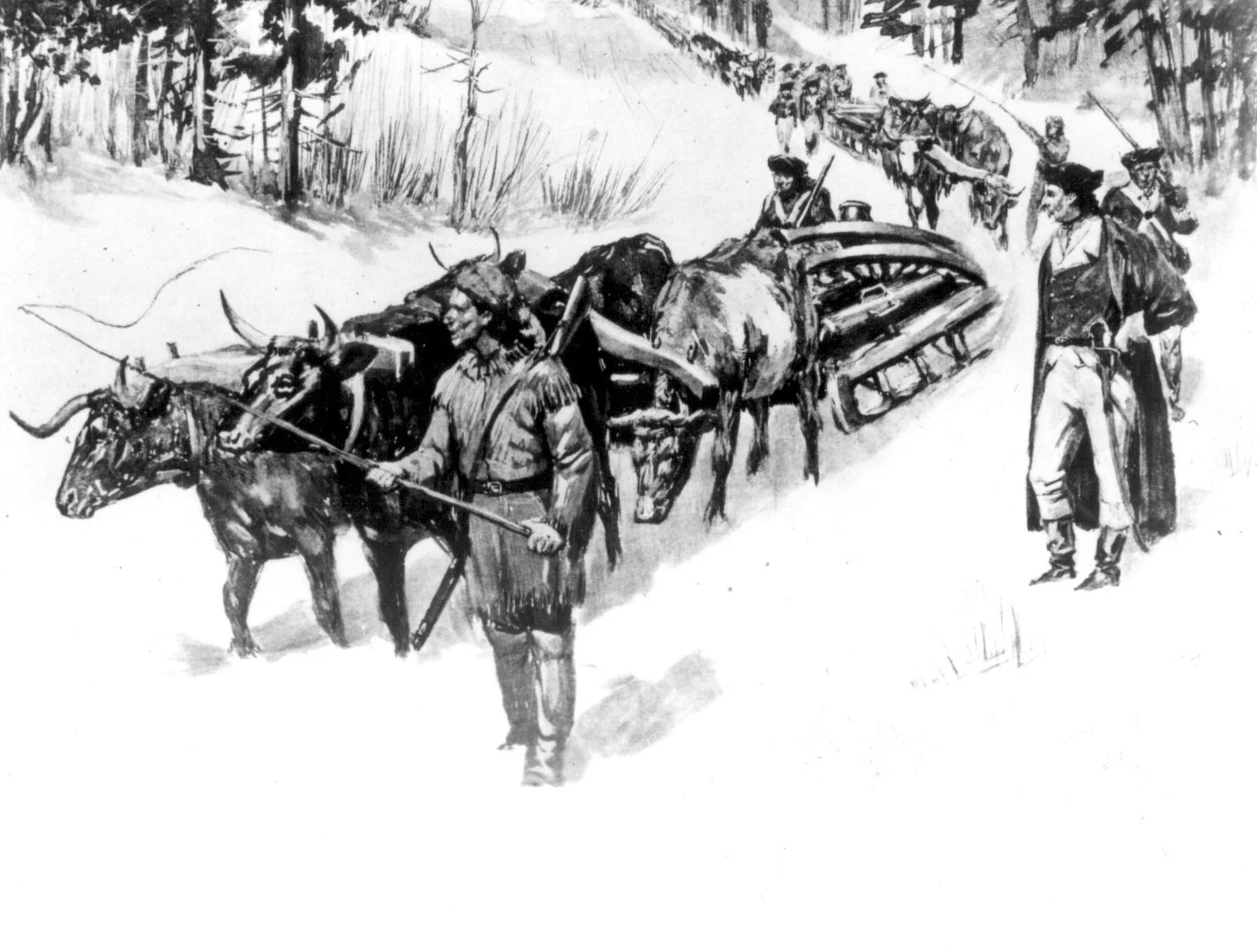
The Noble Train of Artillery (National Archives)
Dorchester Heights
The occupation of Dorchester Heights began at dusk on March 4, with "the Moon shining in its full lustre." Washington ordered his artillery already in place at other points to fire heavily on Boston to distract the British from the operation. Their bombardment accomplished nothing—the British saw what was happening on Dorchester Heights immediately. Incredibly, though, they didn’t fire on the Americans as they went about their work.
1,200 Americans first built covered approaches ascending the Heights. When they were done, 360 ox carts trundled uphill, carrying immense loads of everything from logs and prefabricated gun mounts to the cannon themselves. “Perhaps there never was so much work done in so short a space of time," declared Continental Army General William Heath.
Part of the reason that the British didn’t open fire on this activity is that they believed it would take days for the Americans to finish their work. In fact, the industrious Americans finished their work before morning. When dawn broke, the British saw the guns looming over them. British engineer officer Archibald Robertson mused that, "The Materials for the whole Works must all have been carried, Chandeleers, fascines, Gabions, Trusses of hay pressed and Barrels, a most astonishing nights work [that] must have Employ'd from 15 to 20,000 men.” General William Howe supposedly said that, “the rebels have done more in one night than my whole army could do in months.”
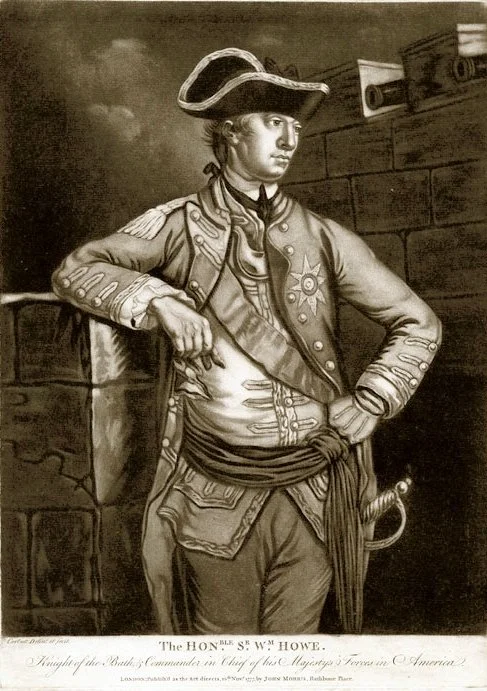
General Sir William Howe (Brown University)
The Attack . . . That Never Came
Washington praised the “great activity and Industry” of his men. More, he looked forward to massacring British attackers in another Bunker Hill. March 5 was “a day never to be forgotten,” he said; “an Ingagement was fully expected—& I never saw spirits higher, or more ardour prevailing.”
Howe nearly obliged him. “In a situation so critical,” he wrote, “I determined upon an immediate attack with all the force I could transport; the ardour of the troops encouraged me in this hazardous enterprise." He ordered 2,400 redcoats to assemble on Boston’s long wharf and board transports to cross the harbor and attack Dorchester Heights. It was, said a British officer, “the most serious step ever an army of this strength in such a situation took, considering the state the Rebel's Works are in and the Number of men they Appear to have under Arms. The fate of this whole Army and the town is at stake not to say the fate of America.”
At the last moment, however, Howe changed his mind. He had been in command at Bunker Hill; he didn’t want to commit the same error again. Recalling his troops, he gathered together his officers. The decision to abandon Boston had been made long ago. The occupation of Dorchester Height just meant they would have to hurry on their preparations a bit faster. Excuses were made; the authorities in London and British troops in Boston heard that an attack would have been made, but the weather prevented it.
On March 7, the British began loading up their transport ships, preparing for departure. But Howe had a word for Boston’s American authorities, that he obviously intended to be passed on to Washington. If the Americans stood by quietly, well and good.
If they interfered with the departure, the British would burn Boston to the ground.