Great War Memoirs, Short Reviews: Passchendaele and the Somme
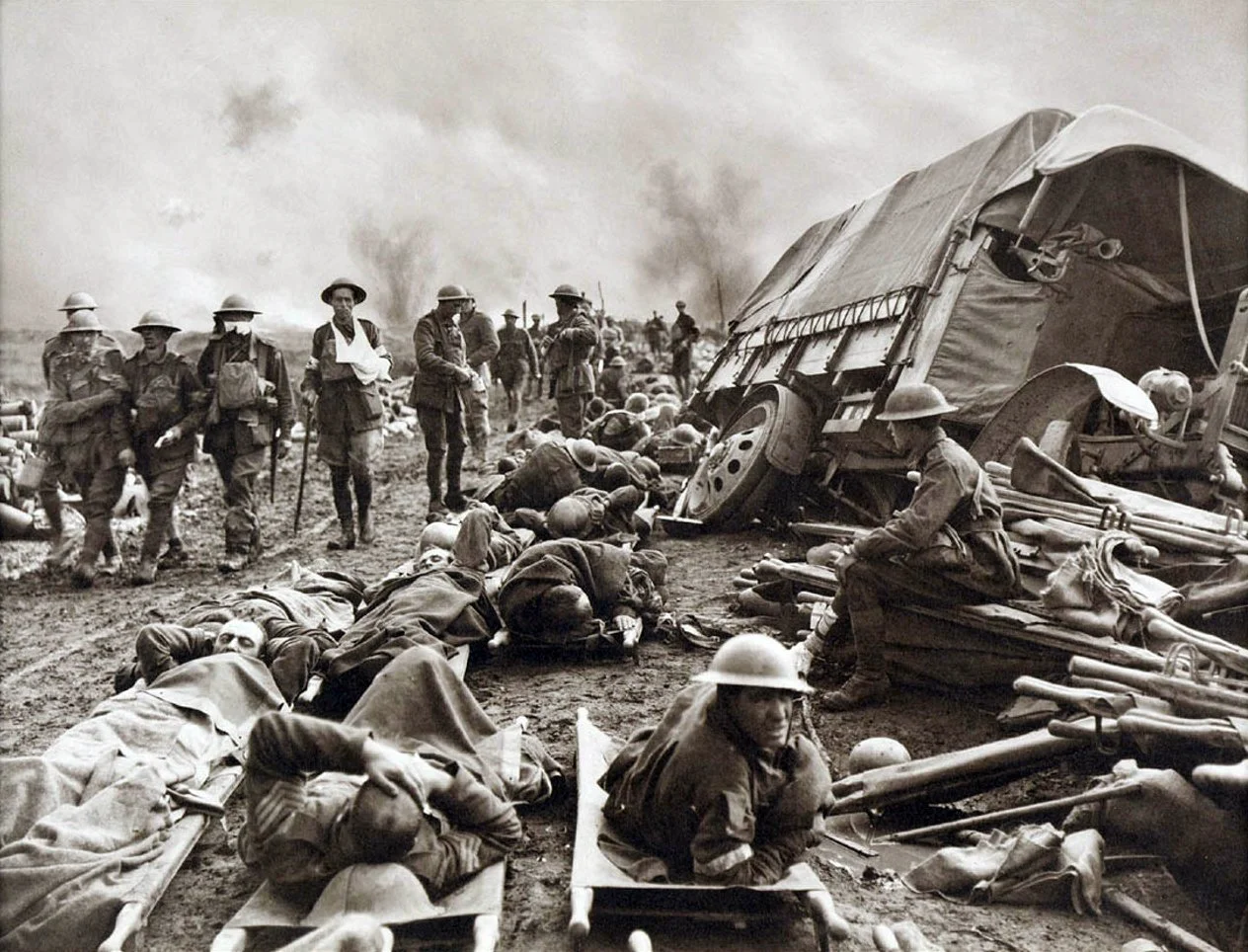
Australian Troops, Menin Road, 1917 (State Library of New South Wales)
Hugh Quigley, Passchendaele and the Somme: A Diary of 1917 (1927)
Thirty years ago I maintained a website, now long defunct but well-visited in its day, dedicated to diaries and memoirs of the First World War. That website transitioned into my book, World War I Memories: An Annotated Bibliography of Personal Accounts Published in English Since 1919 (2004); still in print, but prohibitively expensive, sadly, and obviously not updated for over twenty years. I have read hundreds of diaries and memoirs, published and unpublished, and still collect them; it’s a bit of an obsession. Recently, I’ve committed to reading the many books I’ve missed—either in my collection, newly purchased, or discovered elsewhere; and will publish short reviews here as I complete them.
We begin with Hugh Quigley’s above-titled book, published in London by Methuen in 1928 and now widely available online (I read my copy on Open Library). In 2017 his grandson Ian Quigley published an abridged ebook-edition, cutting passages Ian thought impenetrable, and adding excerpts from a unit war diary. I’m a completist and avoid anything abridged, so I stayed with the original.
High Quigley (1895-1979) was a very odd duck (see the portrait on his Wikipedia page, now in London’s National Portrait Gallery). A graduate of the University of Glasgow, he was very much an intellectual; multilingual, well-traveled, an expert on literature, economics, statistics, industry and engineering—you name it. Glance at his ouevre—this book is probably the only one you might want to read.
During World War I Quigley served with the 12th Battalion, Royal Scots Regiment, entering service in the spring of 1917, and returning home after being seriously wounded in action in October of that year. Most of Passchendaele and the Somme consists of edited letters he wrote home in 1917-1918, with an afterword musing on his experiences; so it is not in fact a diary.
It’s a tough go for most of the way. Quigley went to war with some curiosity, expecting an intellectual experience, and his letters home dwelt on his own and others’ emotions; interesting encounters; and word painting (he seemed to have an obsession with clouds, light, and the boundary between land and sky). After a protracted stay in camp at Etaples, he went with his unit back and forth between Flanders and the Somme, not initially seeing much combat and enjoying the luxury of musing about war’s positive aspects.
Eventually and rather suddenly thrown face-first into front-line service, Quigley was shocked at what he encountered, finally shedding much of his naivete, descending from his philosophical/artistic eyrie and encountering war in all its mud, grit, blood, and horror. These passages, in which Quigley the intellectual comes face to face with reality, and opens his eyes in shocked realization, are worth reading.
Confronted with war, Quigley struggles to escape back into his thoughts. “If one dwelt on such horrors any length of time,” he writes, “nervous cowardice would ensue, and the result would be disaster. The main idea is to be an Epicurean, get the sum of enjoyment from the smallest detail, and trust to the general disposition of Fate.” Ultimately, though, his mind can no longer encompass what he sees: “Insufficiency is the final misery. Intellect sleeps. The brain descends to sordid trivialities. All the fine upliftings and impulsive happinesses darken down to despair, freedom becomes depression, and life resumes itself in existence, a bestial thing.”
Concluding: Passchendaele and the Somme isn’t for beginners in the world of Great War personal narratives; in context, though, it offers moments of clarity and some impressive insights glimpsed through the intellectual muddle (I found the untranslated passages in Latin, German, and Italian intensely annoying and pretentious). My Goodreads rating: four out of five stars.