Invasion! Independence Week, 1776: George Washington @ 250

British Landing at Kip’s Bay, September 1776 (Wikimedia Commons)
250 years ago today, on June 29, 1776, American coastal scouts reported the appearance of fifty British ships off Sandy Hook, New Jersey. Receiving news that same day of this ominous event, Continental Army Commander in Chief, General George Washington, predicted that the ships formed nothing more than an advance detachment of a much larger force. “I shall attempt to make the best disposition I can of our Troops in order to give them a proper reception,” he wrote to Continental Congress President John Hancock, “and to prevent the ruin and destruction they are meditating against us.”
To his army in and around New York City, Washington counseled vigilance. Orders went out for the improvement of fortifications, and the inspection and preparation of arms and ammunition. He had to assume the British might move quickly. Combat could follow within days. “The General expects that all Soldiers, who are instrusted with the defence of any work,” he told his soldiers, “will behave with great coolness and bravery and will be particularly careful not to throw away their fire—he recommends to them to load for their first fire, with one musket ball and four or eight buck shot, according to the size and strenght of their pieces; if the enemy is received with such a fire at not more than twenty or thirty yards distance, he has no doubt of their being repulsed.”
Washington’s prediction that the British fleet off Sandy Hook would quickly expand proved correct. By July 1, 130 ships were there, and more certainly would follow. Washington ordered every man under his command to assemble, declaring in General Orders on that day, “The whole Army to be under Arms to morrow morning at day light, on their regimental parades, with their full Ammunition ready for action.”
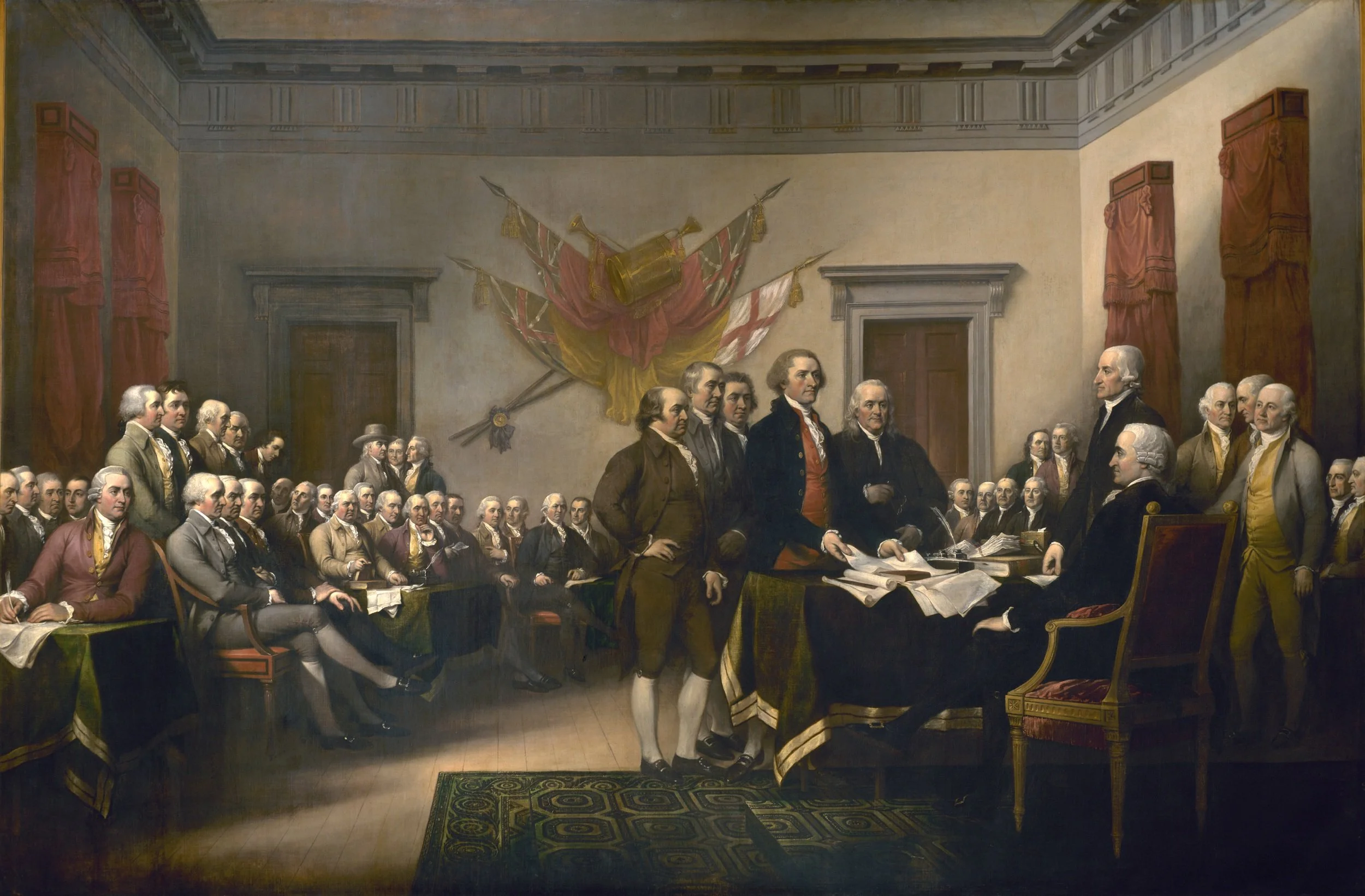
The Declaration of Independence (US Capitol)
Conquer or Die
On July 2, 1776, the Continental Congress in Philadelphia voted to approve the Declaration of Independence. Washington did not know this right away. Although he had been generally aware of political movements toward independence, he believed that, as a soldier, politics were none of his business; his duty was to serve the Continental Congress as the voice of the people, and no more. Still, he exhorted his soldiers to courageously confront the impending enemy invasion, empowered by faith and high principles:
“The time is now near at hand,” he told his army through general orders, “which must probably determine, whether Americans are to be, Freemen, or Slaves; whether they are to have any property they can call their own; whether their Houses, and Farms, are to be pillaged and destroyed, and they consigned to a State of Wretchedness from which no human efforts will probably deliver them. The fate of unborn Millions will now depend, under God, on the Courage and Conduct of this army—Our cruel and unrelenting Enemy leaves us no choice but a brave resistance, or the most abject submission; this is all we can expect—We have therefore to resolve to conquer or die: Our own Country’s Honor, all call upon us for a vigorous and manly exertion, and if we now shamefully fail, we shall become infamous to the whole world—Let us therefore rely upon the goodness of the Cause, and the aid of the supreme Being, in whose hands Victory is, to animate and encourage us to great and noble Actions—The Eyes of all our Countrymen are now upon us, and we shall have their blessings, and praises, if happily we are the instruments of saving them from the Tyranny meditated against them. Let us therefore animate and encourage each other, and shew the whole world, that a Freeman contending for Liberty on his own ground is superior to any slavish mercenary on earth.”
Even as these words were read to the troops, British ships entered the Narrows; and later that evening the British invasion commenced as redcoats splashed ashore on Staten Island’s eastern tip. The British army’s commander, General William Howe, landed on Staten Island on July 3, leading just over 2,000 troops north to occupy the ferry connecting to Elizabeth, New Jersey. Thousands more British troops landed over the following days, enthusiastically welcomed by Staten Island’s large loyalist population.
By July 4, Washington still apparently may not have been informed of the Declaration of Independence, which would be dated that day. Even Hancock, writing to Washington that same day, referred to himself as heading the “Congress to the United Colonies.” The torch of independence had been lit, though, and within days its sputtering flame would become a shining beacon.