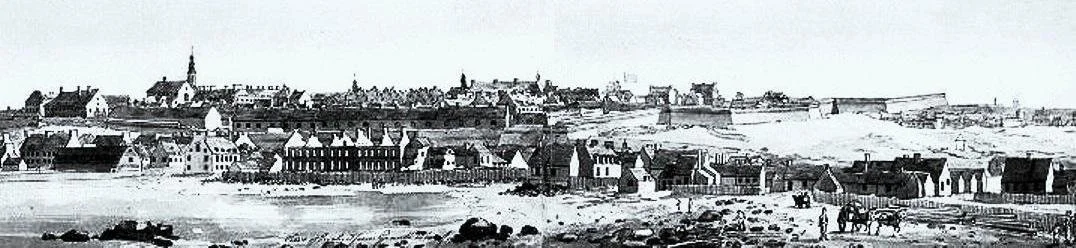
Quebec after the American attack (Library and Archives Canada)
Tidings of Disaster
250 years ago, on May 17, 1776, Continental Army Commander in Chief George Washington received shocking news. The remnants of the army that Benedict Arnold had brought to Canada in an epic journey through the autumn and winter of 1775, and which after a failed attack had continued to hold the city under a sort of siege even after Arnold’s departure, had fallen apart on May 6, 1776, after the arrival of British reinforcements in the city. Even as Washington read about the catastrophe, the survivors were streaming southward across the wilderness; Montreal, captured at such cost, would have to be abandoned.
News of the defeat led Washington to conclude, as he told Major General Philip Schuyler of New York, “that the Prospect we had of possessing that Country of such Importance in the present Controversy is almost Over.” For Washington, the only good news was that the defeat took place in time for him to recall the reinforcements and supplies that Congress had ordered him to send northward; had the American army outside Quebec held on longer, everything likely would have been lost.
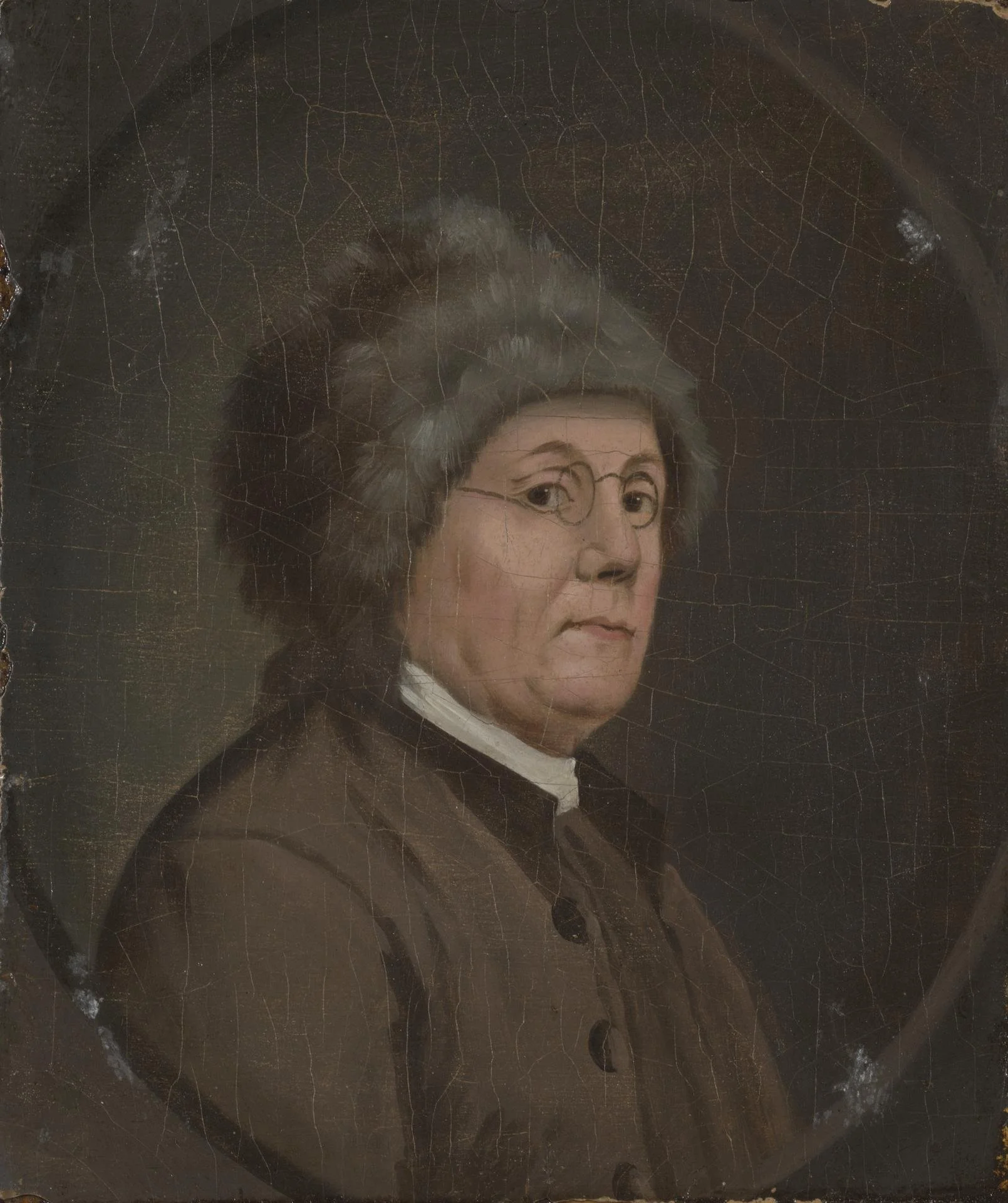
Benjamin Franklin after his return from Canada, by John Trumbull (Yale University Art Gallery)
Illusions Shattered
Benjamin Franklin had in February 1776 been appointed a member of a three-man diplomatic commission to Canada, to convince its Indian and European inhabitants to reject British rule and join the thirteen colonies. The defeat of May 6 rendered the commission irrelevant. On May 20, Washington wrote to Franklin: “To what cause to ascribe the sad disaster, I am at loss to determine, but hence I shall know the events of War are exceedingly doubtfull, and that Capricious fortune often blasts our most flattering hopes. I feel this important and Interesting event, not a little heighten’d by Its casting up, just on your entrance and that of the other Honorable Commissioners in that Country. Tho your presence may conduce to the public good in an essential manner, yet I am certain you must experience difficulties and embarrasments of a peculiar nature. Perhaps in a little time, Things may assume a more promising appearance than the present is, and your difficulties in some degree be done away.”
In fact, Franklin had departed Montreal to return to Philadelphia nine days before Washington wrote his letter; Franklin’s only profit being the fur hat he had acquired there and would wear during his subsequent mission to Paris, thus charming his French counterparts with his faux frontier-rustic persona.
The events of May 1776 shattered any illusions Washington had harbored of conquering Canada—permanently, as it turned out. In years to come, there would be resurgences of enthusiasm in Congress, and the army, for a renewed expedition to conquer Canada. Washington hesitated to actively oppose these efforts, not wanting to be perceived as timid or a naysayer; but neither did he lend his support. From here on, his entire focus would be on achieving the independence of the original thirteen colonies, leaving Canada to go its own way.