Palace or People’s House? Founders’ Intent for the White House, Part I
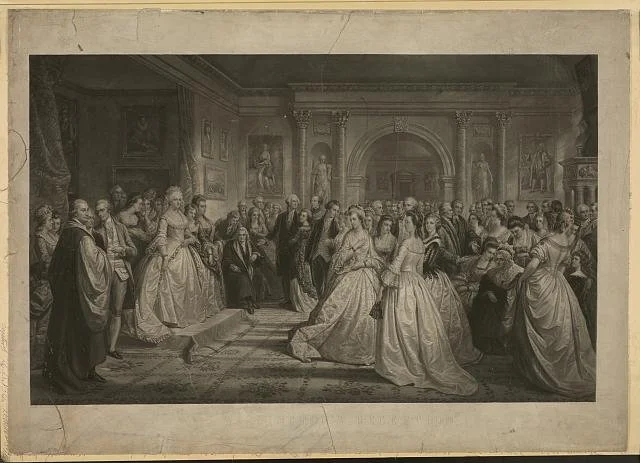
Lady Washington’s Reception, print circa 1861 (Library of Congress)
Founding Precedent
The first President of the United States, George Washington, who served two terms from 1789-1797, never lived in what became the White House, or Executive Mansion. But he did play a pivotal—yet not unilateral—role in what it would become.
After initially living in two different homes in New York City, in November 1790 President Washington moved into a comfortable, but hardly palatial home, previously owned by financier Robert Morris, in Philadelphia. That city served as the nation’s temporary capital, but agreement had already been made to establish a Federal City on the banks of the Potomac River as the nation’s permanent capital—what eventually became Washington, D.C.
As president, Washington understood that everything he did would be highly symbolic, creating precedents for how chief executives would conduct themselves in the future. It’s not too much to say that he actual created the office of the presidency. One crucial issue concerned the manner in which the chief executive would live. Washington believed in two key principles: Dignity, and Accessibility. In Philadelphia, his public life emphasized ritualized ceremony, and entertaining, in keeping with the importance of the young United States, its government and the office of chief executive. Visitors to the mansion must therefore be received in high style, yet with befitting restraint.
That being said, Washington understood—and the American people expected—that the president must always be accessible. As the leader of a great democracy, the president was in effect the first American; but, chosen as he was by the people, he was still above all a citizen, fundamentally one of them. Any sense of exclusivity—entertaining only the rich elites—or of shutting himself off from public access, could be and was denounced.
Still, the president had many duties, and could not just while away his time in social affairs. His business was the nation’s business; his example, hard work—the same manner that Washington had exhibited as commander-in-chief during the war. His entertainments and style of living therefore emphasized dignity, decorum, integrity and gravitas; without pomp or grandeur. Washington’s so-called presidential levees, or receptions—he didn’t shake hands, or engage in idle chat, but also didn’t behave like a prince—were stylish but never sumptuous. He didn’t let them last too long. Spectacle or projecting power was not his intent; kings did that, not the President of the United States. Even so, many Americans condemned Washington’s entertainments as undemocratic, and would never have accepted anything on a greater scale. They thought he should spend all his time interacting quietly with citizens, or working at his desk.
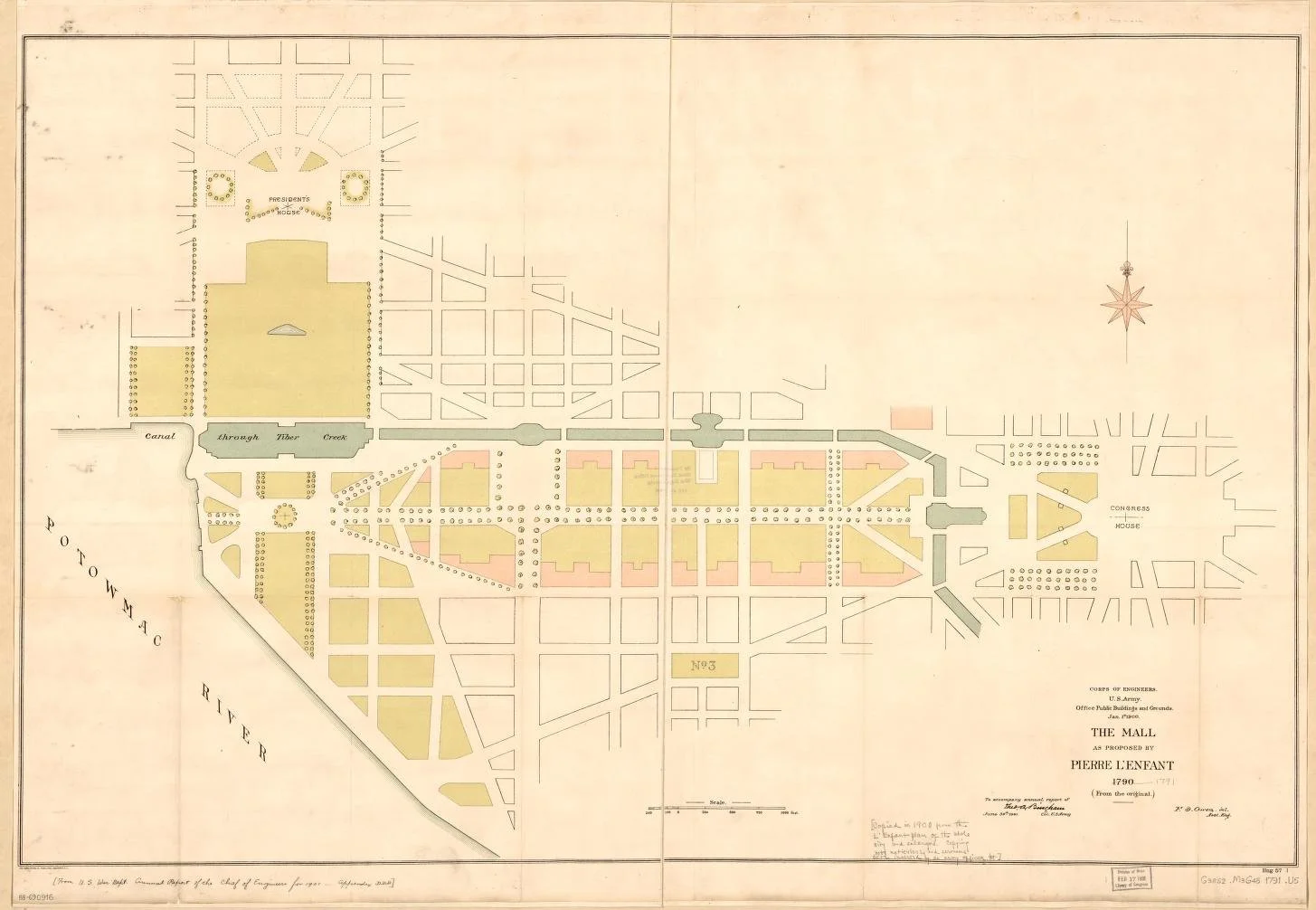
L’Enfant’s Plan for the National Mall (Library of Congress)
Pierre L’Enfant’s Presidential Palace
Frenchman Pierre L’Enfant, whom the president first entrusted to design the Federal City, unfolded a vision that was nothing less than majestic. His plans—which we have no space to dwell upon here—built upon eighteenth-century European concepts of imperial urban planning. As Washington selected the location for the new presidential mansion—at the site where the White House stands today—L’Enfant initially envisioned an actual palace for the chief executive’s home. Although no exact plans now exist, it apparently would have been five times the size of the White House as it was eventually built. Writing to the president on June 22, 1791, L’Enfant argued that the president’s home should combine with the “sumptousness of a palace the convenience of a house and the agreableness of a country seat.”
Even to L’Enfant, then, the chief executive’s residence was to be palatial only in some respects, while also being a “house” and a gentleman’s “country seat.” High living was important, but this did not necessarily entail lavish entertaining, or imperial bombast. Washington, with an expansive view of his nation’s future, initially approved L’Enfant’s idea in principle. It’s important to note, though, that Washington’s papers do not reveal one single instance of his referring to the building as a “palace”; nor did he ever, at any time, make a case for why it needed to be exceptionally large, or glorious in appearance.
Was the president’s residence in L’Enfant’s conception, then. to be a new Palace of Versailles, the residence of French kings? Some have made the comparison, then and now, including supporters of 2026 White House expansion who have argued that the two buildings should be comparable. But White House historian William Seale, author of the magisterial The President’s House, explicitly rejects the comparison. Bold as it was, L’Enfant’s “palace,” Seale points out, was substantially smaller than Versailles—much more like a country chateau than the palace of “Sun King” Louis XIV. Even so, L’Enfant’s design was still on a scale, as the editors of the Jefferson Papers tell us, sure to “have aroused the anger of those who were already beginning to complain of monarchical tendencies in the administration.”
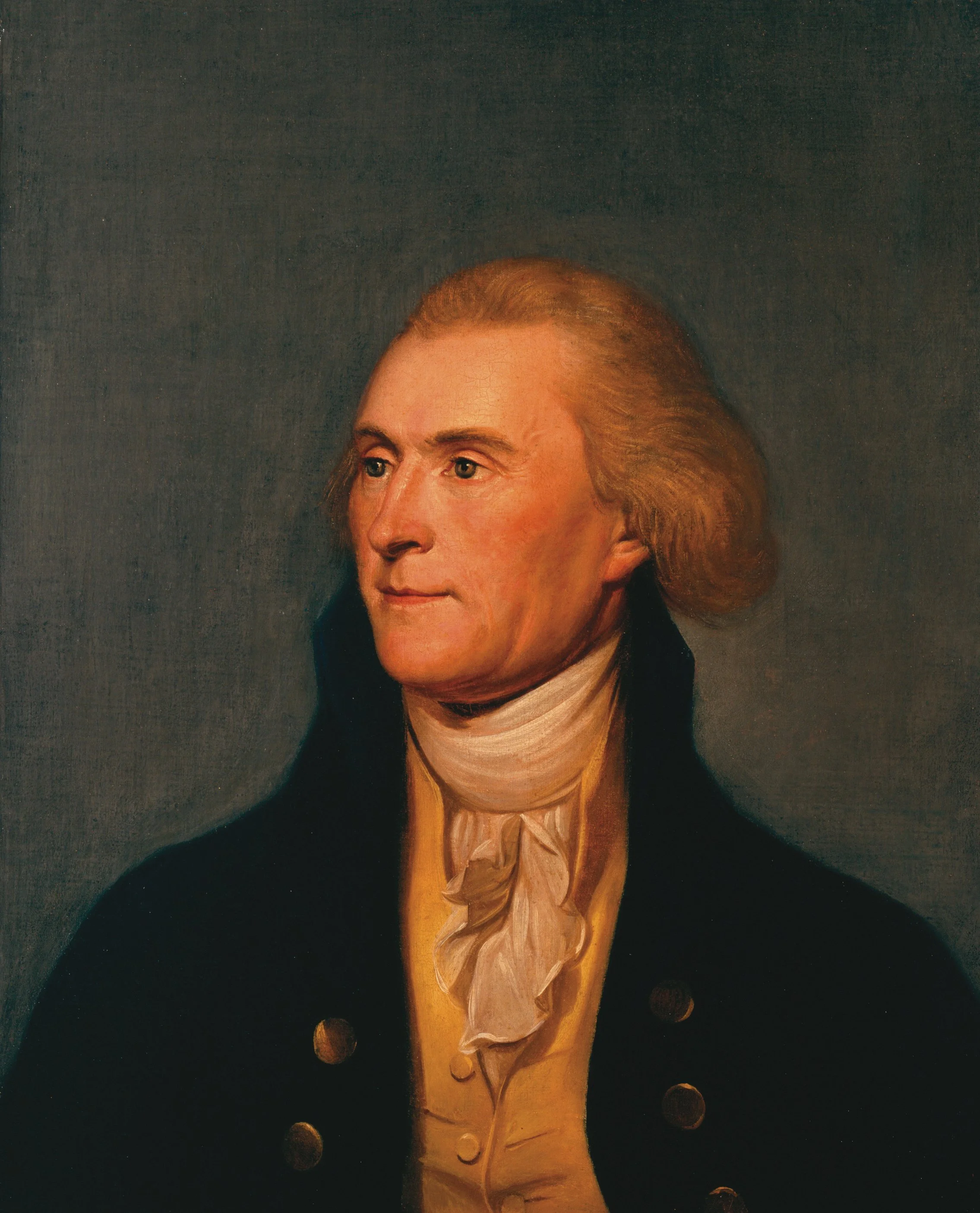
Thomas Jefferson, 1791, by Charles Wilson Peale (Independence National Historical Park)
L’Enfant Deposed—and His Palace?
Thomas Jefferson, then Secretary of State (and no mean architect himself), and L’Enfant despised each other. Jefferson, an avid supporter not just of the French Revolution but of its most radical adherents, abhorred L’Enfant’s vision for the capital, believing that it projected an imperial vision inconsistent with America’s founding principles. The Frenchman nevertheless counted on Washington’s support to see through his plans for the Federal City. This included the presidential “palace.” Had he been so minded, the president might have considered trading on his mandate—including his unanimous election—to impose his will over opposition from Jefferson and others.
Washington did no such thing. Always mindful of potential accusations of tyranny at a time of increasing political divisions, and keeping the Constitution’s principles of compromise in mind—he had no interest in foisting upon his political adversaries concepts that they despised. And in fact, although he broadly approved L’Enfant’s vision, there’s no evidence that Washington ever became a true believer or strong advocate for it. Much work remained to be done, and Washington still needed a lot of convincing. In the end, L’Enfant’s abrasiveness and, admittedly, his inefficiency, ultimately convinced Washington, in early 1792, to abandon the Frenchman. L’Enfant departed the United States bitterly, much to the delight of Jefferson and other republicans whose concept of the presidential home was definitely not palatial.
With American political divisions in 1792 so deep as to threaten violence, civil war, or even something like the Terror then rocking revolutionary France, the fate of the “presidential palace” concept remained to be seen. Washington’s upcoming choices would be definitional for the United States, and set generational precedents that lasted until 2025.