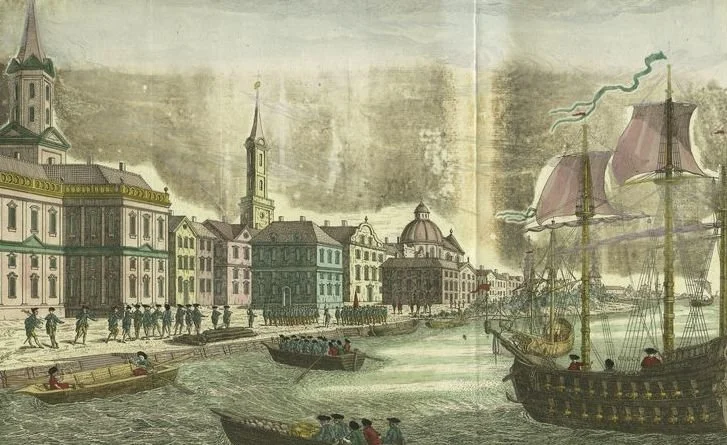
The Arrival of British Troops in New York City, 1776 (Wikimedia Commons)
With independence declared, and the British assembling in force on Staten Island, the last thing the ever-aggressive General George Washington wanted to do was sit and wait for the enemy to attack him. Assembling his general officers, he proposed an attack upon Staten Island as suggested by one of his officers, General William Alexander, the self-styled “Lord Stirling.” But the general officers demurred. Too risky, they said. Instead, they reluctantly agreed to a possible raid on Staten Island in order “to alarm the Enemy & encourage our own Troops who seem generally desirous something should be done.” Washington’s friend, General Hugh Mercer, was given charge of the raid; but bad weather would eventually force its cancellation.
Meanwhile, the British naval armada continued to assemble, including Lord Richard Howe’s flagship Eagle. On the afternoon of July 12, two British warships boldly sailed up the Hudson River past American shore batteries, which flailed at them ineffectively—indeed, six American gunners were killed when their poorly maintained pieces exploded. Not only that, but when the drums beat to call the Continental Army to parade under arms, many of them ignored the summons and instead wandered along the shore, gaping at the British warships. Washington was furious; all his efforts to instill discipline among his amateur soldiers seemed ineffectual.
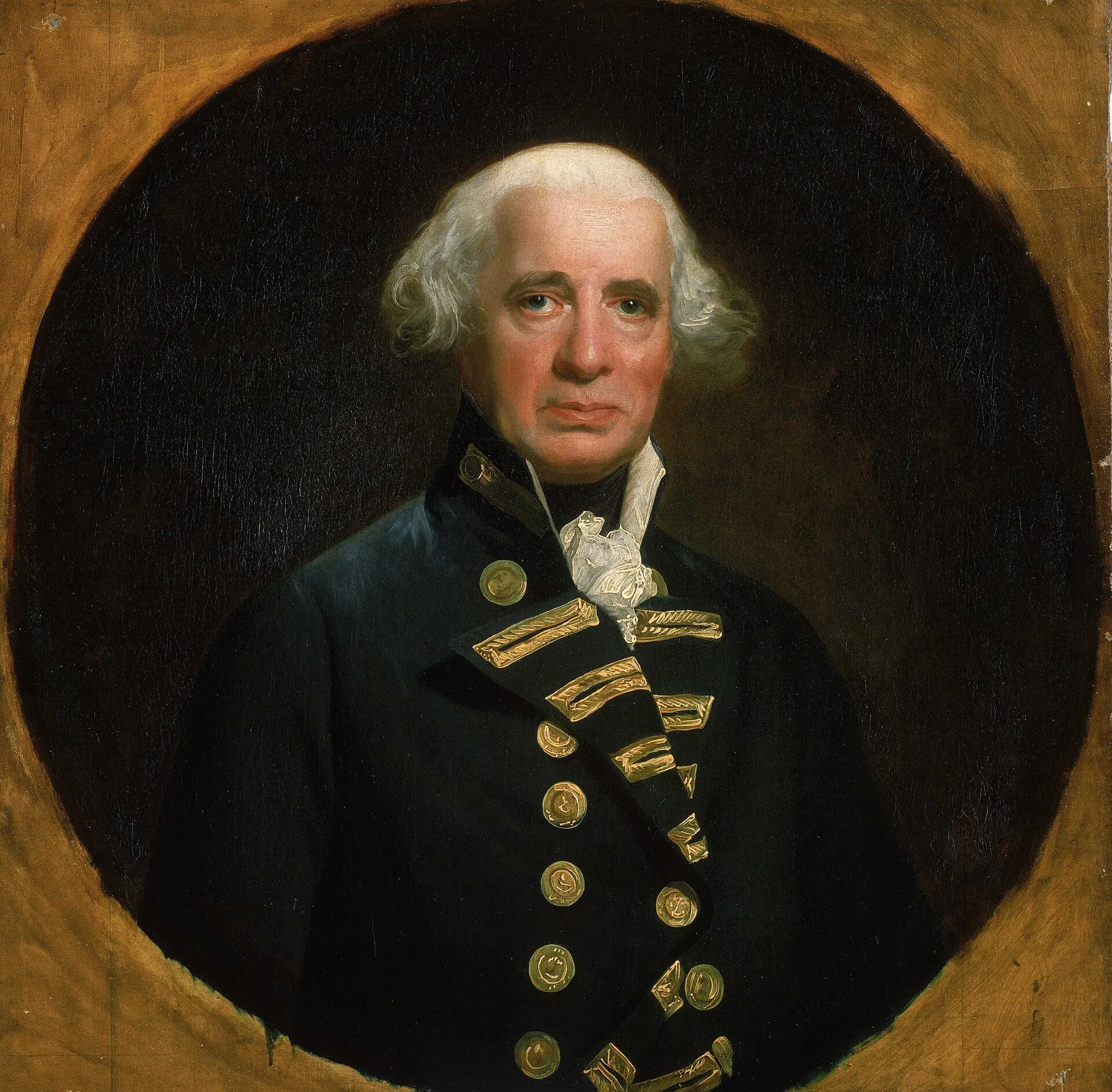
Admiral Richard Howe, 1794 (Wikimedia Commons)
“All the World Knew Who General Washington Was”
On July 13, Lord Howe—brother of General William Howe, and equally sympathetic toward the Americans, if not toward their independence—penned a conciliatory, if condescending, letter, to Washington. It read:
“The Situation in which you are placed and the acknowledged liberality of your Sentiments, induce me very much to wish for an opportunity to converse with you on the Subject of the Commission with which I have the honor to be charged; As I trust that a dispassionate consideration of the Kings benevolent intentions, may be the means of preventing the further Effusion of Blood, and become productive of Peace and lasting Union between Great Britain and America. If this proposal should be acceptable, I would advance in a Frigate to have the pleasure to receive you, as near to the Town of New York as will be most for your accommodation. I flatter myself I shall find no difficulty in obtaining Credit to my Assurances for the perfect safety of your Person, & free liberty to return on Shore at your Pleasure. Tho’ I shall be equally ready to afford any more preferable Security that may be required, in case no other objection occurs to the desired Interview.”
The letter’s cover, however, was insultingly addressed to “George Washington, Esquire.” Colonel Joseph Reed and Samuel Blachley Webb, the two American emissaries into whose hands the letter was placed, refused to accept it, saying they knew no one of that name and title in their army. Asked how the letter should be addressed, Reed and Webb said, “all the World knew who Genl. Washington was since the Transactions of last Summer.” Embarrassed, the British had to take back the admiral’s letter.
Another attempt to address Washington three days later, addressed “To George Washington Esq. &c. &c. &c.” – meant to imply his title without actually using it - was for the same reason rejected.
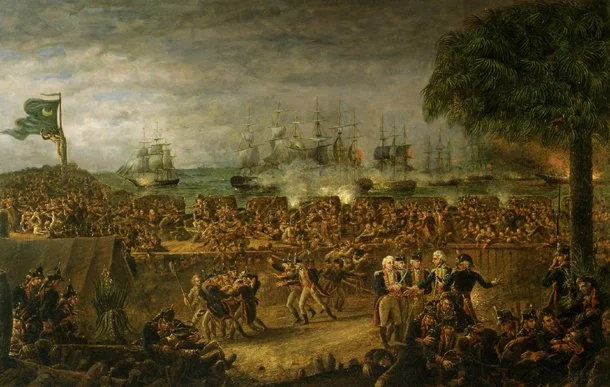
The Battle of Fort Moultrie, by John Blake White, 1826 (Wikimedia Commons)
The Waiting Game—and Distant Hopes
Meanwhile, Washington could do little but sit and watch as the British invasion force continued to assemble, offshore and on Staten Island. The commander in chief ordered measures taken for the security of the Hudson Highlands. He mandated the quick incarceration and removal of disloyal (to the Revolution) Americans. He took measures for discipline (dismissing from the service an entire unit of the Connecticut Light Horse that refused to perform fatigue duty) and supply, and communicated fulsomely with Continental Congress President John Hancock, nearby state governors, and other officials. He told his general officers not to be afraid to drop by his headquarters unannounced and join him for dinner. But that was about all he could do.
On July 19, however, Washington received welcome news of the American victory at the Battle of Sullivan’s Island outside Charleston, South Carolina, against a British expedition attempting to capture the city. Would he be able to pull off the same miracle at New York City?